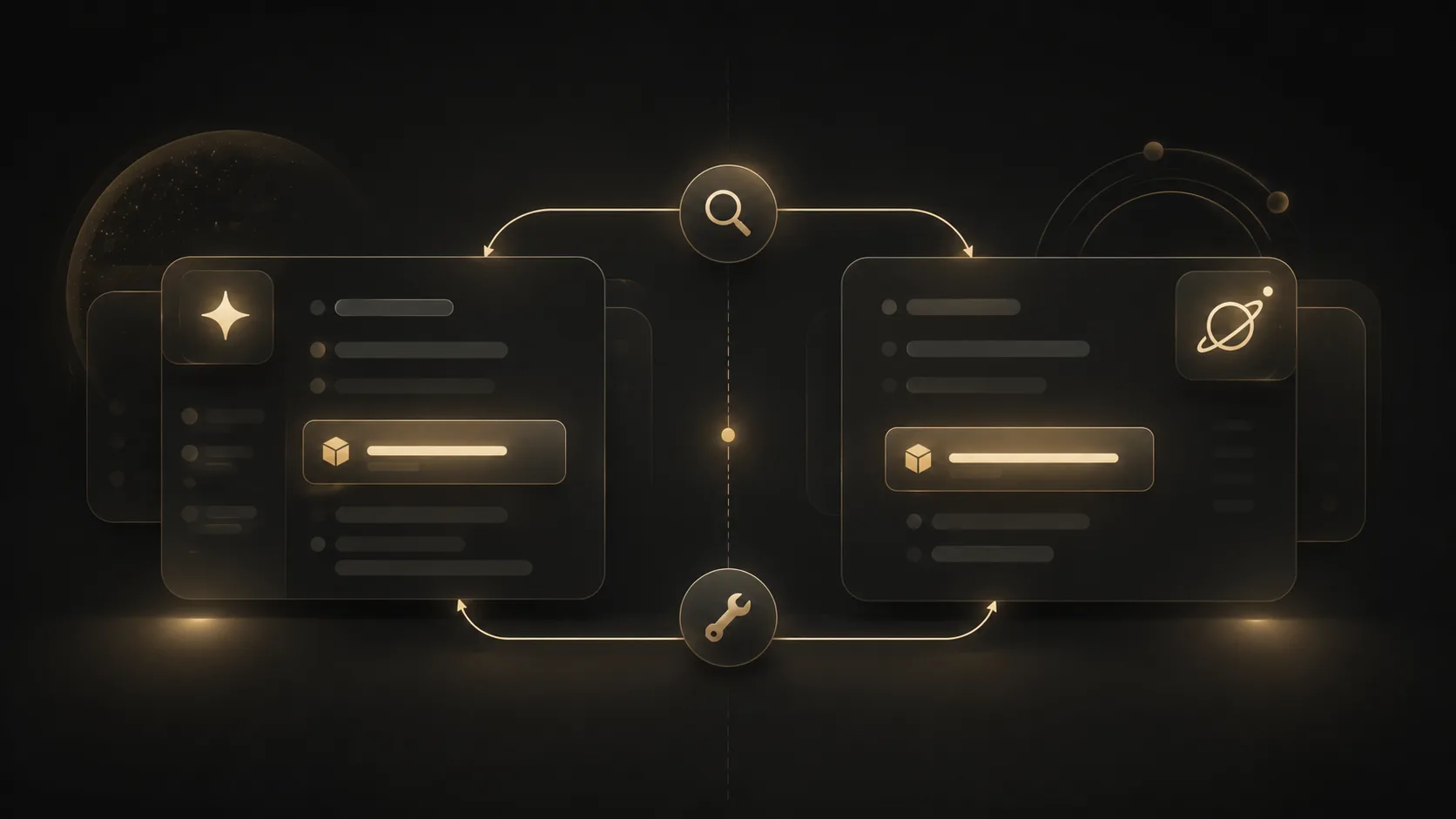
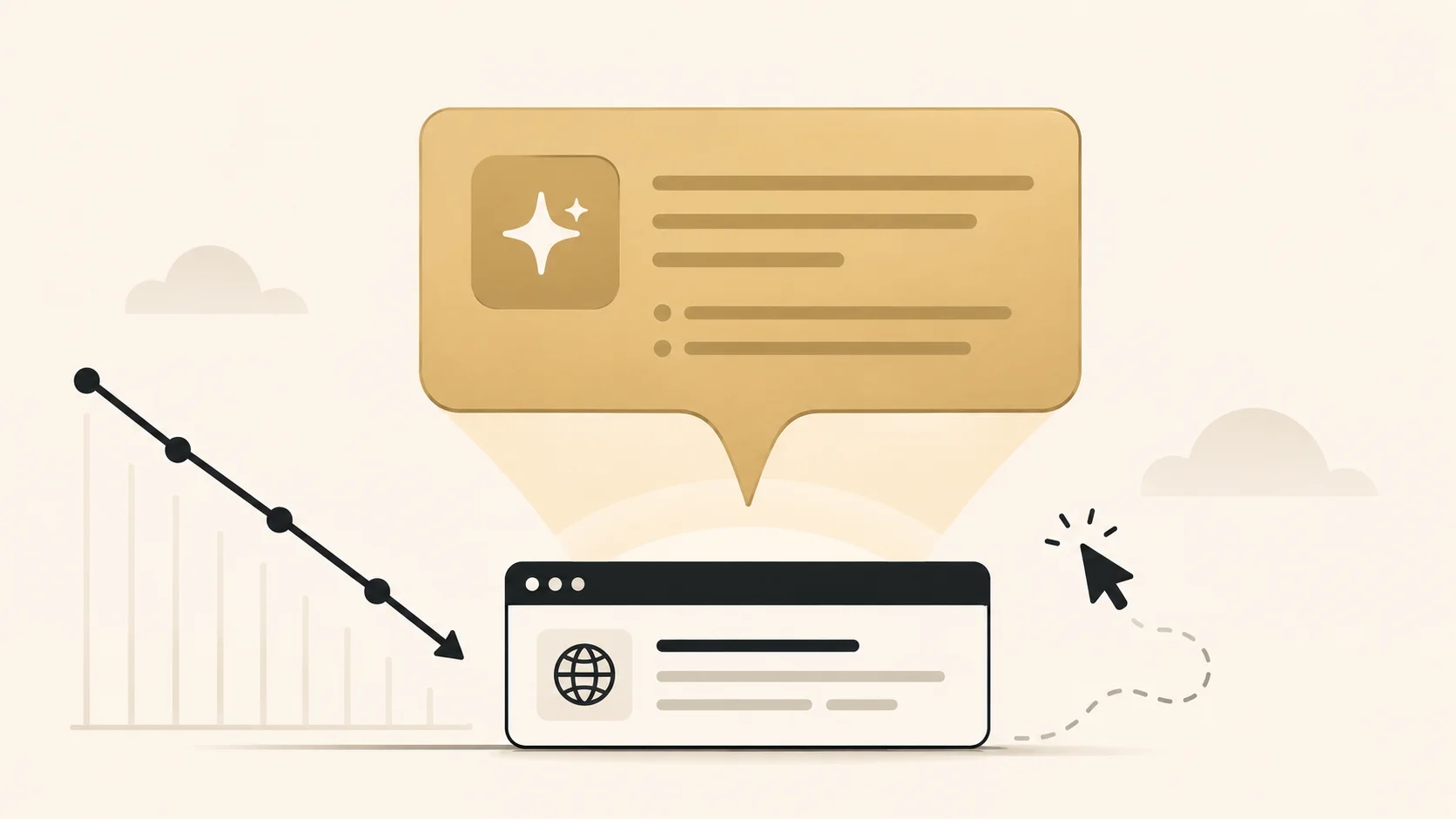
When organic traffic declines because AI answers displace clicks, the fix is not recovering old traffic patterns but ensuring your brand appears in the AI-generated answers that replace them. As of 2026, Google search impressions are up 49% year on year, yet click-through rates have dropped 30% (BrightEdge, May 2025). Gartner predicted traditional search volume would drop 25% by 2026 due to AI chatbots. CLEO's GEO engine supports seven AI engines: ChatGPT, Google AI Overviews, Bing AI Overviews, Perplexity, Gemini, Claude and DeepSeek, with Grok and Meta AI on Enterprise and Enterprise+ for nine, with up to four active per site at a time, tracking brand citations and showing exactly where your brand is visible, where it is invisible, and what to fix. The Presence Scan diagnoses why your content is not being cited, and Quill produces content structured for AI citation.
This article addresses a specific frustration that marketing teams are increasingly reporting: the brand ranks well in traditional search, yet competitors appear in AI Overviews and AI-generated answers while the brand does not. The underlying problem is that traditional search ranking and AI answer citation are different signals driven by different factors. Understanding the distinction is the first step towards reclaiming visibility.
The zero-click reality: impressions up, clicks down
As of 2026, the data on zero-click behaviour is consistent across multiple sources. Google search impressions are up 49% year-over-year, yet click-through rates have dropped 30% (BrightEdge, May 2025). Gartner predicted traditional search volume would drop 25% by 2026 due to AI chatbots. McKinsey projects $750 billion in US revenue through AI-driven search by 2028.
What this means in practice: more people are searching, but fewer are clicking through to websites. AI answer engines, including ChatGPT, Google AI Overviews, Bing AI Overviews, Perplexity, Gemini, Claude and DeepSeek, are satisfying queries directly. The user gets the answer without leaving the AI interface. The traffic has not disappeared. It has been absorbed by AI engines that present synthesised answers rather than lists of links.
For brands that built their growth model on organic click-through traffic, this shift is structural, not cyclical. Optimising for higher rankings within the same system will not recover the lost clicks. The system itself has changed.
Where the displaced demand goes instead
Zero-click displacement does not destroy the demand; it relocates it. The impression still happens, but it happens inside someone else's answer, attributed to whichever sources the model chose. That reframes the problem from a traffic problem into an attribution problem: the question stops being "how do we win the click" and becomes "when the answer is assembled without a click, is our brand inside it".
Two things follow. First, the loss is measurable only if you track presence in the answer, not sessions in analytics: analytics cannot see an impression that never became a visit. Second, recovering it is a different discipline from ranking recovery, because ranking well and being cited are separate tests with separate signals.
That second point is the one most teams get wrong, and it has its own diagnostic. If your content ranks well in traditional search but competitors keep appearing in AI overviews while you do not, the cause is one of three specific gaps, machine readability, extractable structure, or off-site corroboration, and the audit for identifying which one is biting you is set out in competitors show up in AI overviews and you don't. If the symptom is the traffic curve itself rather than the citation gap, declining organic traffic and AI answers covers how to confirm the cause before acting on it.
The rest of this page stays on the economics: what the displacement costs, and how to decide what it is worth spending to recover.
How to reclaim brand visibility through CLEO's GEO and Social engines
Reclaiming visibility when AI answers displace your brand requires work across two surfaces: making your owned content AI-citable and building the third-party presence that AI engines rely on for corroboration.
CLEO's SEO + GEO plan addresses the owned-content layer. The AI Search score (which combines AI Recommendation and AI Citation across ChatGPT, Google AI, Gemini, Claude and Perplexity) measures brand presence. AI engine visibility monitoring across seven supported AI engines: ChatGPT, Google AI Overviews, Bing AI Overviews, Perplexity, Gemini, Claude and DeepSeek, with Grok and Meta AI on Enterprise and Enterprise+ for nine, with up to four active per site at a time shows exactly where the brand appears and where it does not. Query monitoring tracks the specific queries where AI answers are displacing clicks. AI-citation tracking shows which competitors are cited and with what frequency. Competitor monitoring tracks named competitors with win rate, citation share, average position, and threat tiers. This is proven: CLEO ran its own engine on regencleo.ai and lifted its GEO Score from 14 to 50 (with AI Readability 35 to 96 and SEO 40 to 95) in 30 days (the CLEO runs on Orbit customer story), and for client DisburseCloud took AI citation share from 17% to 67% in 90 days at 95% Wilson confidence, replacing lost clicks with presence inside the answers themselves.
The Presence Scan diagnoses why content is not being cited: missing schema markup, unstructured formatting, absent entity definitions, or content that does not answer the queries AI engines synthesise. Agentic-readiness fixes and existing-content fixes restructure pages for AI citability. GEO content is purpose-built for AI citation. Schema and entity markup ensure AI models can identify and attribute the brand. LLM traffic tracking measures visitors referred by AI engines, providing a direct metric for whether fixes translate to visibility.
CLEO's Social engine (SEO + GEO + Social plan) addresses the third-party presence layer, which matters because 85% of brand mentions in AI answers originate from third-party pages. Listening spans X, LinkedIn, Reddit, Medium, YouTube, Quora, and Bluesky. Brand mentions with sentiment classification show how the brand is discussed across platforms. Influencer tracking identifies who is shaping category conversations. A monthly publishing allowance spans LinkedIn, X and Bluesky (X and Bluesky publish from CLEO; LinkedIn is posted by the team), and AI-drafted replies build active presence. Quill produces articles for distribution across channels. Current prices and allowances for both plans are published at regencleo.ai/pricing.
The Citation Loop connects social activity data to AI citation tracking from the GEO engine, showing whether social engagement correlates with changes in AI citation presence. This feedback loop is essential because third-party mentions are the primary driver of AI citation, and social platforms are where third-party conversations happen.
Strategy sessions (included with GEO) and campaign orchestration turn monitoring data into action: identifying which queries matter, which competitors are gaining, and where to focus content and social activity for maximum citation impact.
The economic case for addressing AI displacement now
McKinsey projects $750 billion in US revenue through AI-driven search by 2028. Brands visible in AI answers capture a share of that revenue. Brands invisible in AI answers lose it to competitors who are cited.
The conversion data reinforces urgency. LLM-referred visitors convert 4.4x better than traditional organic visitors (superprompt.com, October 2025). When a buyer asks an AI assistant for recommendations and your brand appears, the resulting visit carries higher intent than a generic organic click. When your brand does not appear, the buyer may never reach your site at all.
The persistence data adds another dimension. Only 30% of brands that appear in one AI answer persist in the next (AirOps). This means that AI citation presence is not a one-time achievement. It requires sustained monitoring and continuous work to maintain. Brands that start building AI citation presence now compound their advantage over time. Brands that wait face an increasingly competitive landscape.
Only 28% of marketers have a solid ROI measurement system (Firework, 2025). Teams that measure AI citation presence alongside traditional metrics gain a strategic advantage in budget allocation and executive reporting.
Steps to address zero-click displacement
- Quantify the displacement. Compare your organic click-through rates over the past 12 months. Identify which queries now trigger AI Overviews or AI answers. Query ChatGPT, Perplexity, and Claude directly with your target queries to see whether your brand appears.
- Run the free Presence Scan (regencleo.ai/scan) to establish a baseline for your brand's AI readiness and visibility across AI engines.
- Diagnose the gap between ranking and citation. The Presence Scan identifies specific content and structural issues preventing AI citation: missing schema, unstructured content, absent entity definitions, weak third-party corroboration.
- Fix owned content for AI citability. Implement schema markup, restructure pages for answer-first formatting, add statistical citations and quotable statements, and create or update your llms.txt file.
- Build third-party presence. Audit where competitors are mentioned and you are not. Create a plan for earning mentions across publications, social platforms, forums, and reference sources.
- Monitor. AI answer outputs are not static. Track citation presence, competitor movement, and query-level changes across the AI engines you track. Adjust strategy based on what correlates with citation gains.
Frequently asked questions
Why is organic traffic declining even though impressions are increasing?
Google search impressions are up 49% year on year, yet click-through rates have dropped 30% (BrightEdge, May 2025). AI answer engines satisfy queries directly without clicks. Gartner predicted a 25% drop in traditional search volume by 2026 from AI chatbots. The traffic is absorbed by AI answers, not lost to competitors.
Why do competitors appear in AI overviews but my brand does not despite ranking well?
Traditional search ranking and AI citation are different signals. AI engines cite brands with structured content, entity clarity, schema markup, and broad third-party mentions. Only 11% of domains are cited by both ChatGPT and Perplexity simultaneously. Eighty-five percent of brand mentions in AI answers come from third-party pages, not the brand's own website.
How can I regain control of my brand narrative when AI leaves me out?
Regaining control requires structured content for AI extraction, building third-party presence across authoritative sources, and continuous monitoring across AI engines. CLEO's GEO engine supports seven AI engines: ChatGPT, Google AI Overviews, Bing AI Overviews, Perplexity, Gemini, Claude and DeepSeek, with Grok and Meta AI on Enterprise and Enterprise+ for nine, with up to four active per site at a time, tracking AI citations. The Social engine builds third-party mentions across seven platforms. The Citation Loop connects social activity to AI citation data.
Are visitors from AI engines more valuable than traditional organic traffic?
LLM-referred visitors convert 4.4x better than traditional organic visitors (superprompt.com, October 2025). They arrive with higher intent because the AI assistant has already positioned the brand as a credible answer to their query.
What tools help brands show up in ChatGPT and AI Overviews?
CLEO's SEO + GEO plan provides AI visibility monitoring, AI Search score, AI-citation tracking, competitor monitoring, Presence Scan, schema and entity markup, GEO content, and LLM traffic tracking. The Social engine builds the third-party presence that drives 85% of AI citations.
How much revenue is at stake from AI-driven search?
McKinsey projects $750 billion in US revenue through AI-driven search by 2028. Brands visible in AI answers capture a share. Brands invisible in AI answers lose it to cited competitors. Only 30% of brands that appear in one AI answer persist in the next, meaning sustained presence requires ongoing work.
Does improving AI visibility mean abandoning SEO?
No. Traditional search remains a significant discovery channel. Content that ranks well and is structured for AI citation serves both surfaces simultaneously. The SEO half of CLEO's SEO + GEO plan handles search foundations while the GEO half handles AI answer visibility. The investment should expand to include AI visibility, not replace SEO.
How do I measure whether my brand is being cited by AI assistants?
Query ChatGPT, Perplexity, and Claude directly with your target queries. For systematic measurement, CLEO's GEO engine supports seven AI engines: ChatGPT, Google AI Overviews, Bing AI Overviews, Perplexity, Gemini, Claude and DeepSeek, with Grok and Meta AI on Enterprise and Enterprise+ for nine, with up to four active per site at a time, tracking brand citations and providing AI Search score, AI-citation tracking with competitor comparison, and LLM traffic tracking to measure AI-referred visitors. Only 28% of marketers have a solid ROI measurement system (Firework, 2025). Adding AI citation metrics closes this gap. Related reading: what marketing teams do when organic traffic declines because people are getting answers from AI instead of clicking through, and why competitors appear in AI overviews when you don't.
Check your score. The honest place to start is your own number. Enter a domain at regencleo.ai/scan and the engine reads what ChatGPT, Google AI Overviews, and Perplexity say in response to your category's most-asked questions, reads where you sit in classical search, and reads what the social surfaces carry. It returns a single page, no login required. Paid plans track up to four of the seven supported AI engines per site.