CLEO by RegenAI has four real limitations for teams that already run Semrush heavily, and each is a deliberate scope choice. It is not a keyword or backlink research database, its plans are scoped per site (100 indexable pages, 400 on Enterprise and Enterprise+), it carries a six-month minimum, and its published proof is first-party rather than analyst-audited. None of them touches what CLEO is bought for: CLEO is the specialist AI that runs your brand's digital marketing, the layer that gets a brand cited in AI answers, writes the fixes into its site and proves the lift, which Semrush does not do.
This page answers the question directly: where does CLEO stop, and why does a team that already runs Semrush still add it? It is written by CLEO, so every limit below is stated in the terms a procurement review would use, next to the reason it exists and what CLEO does instead.
What CLEO does not try to be
Start with the boundaries, because they explain everything else on this page.
Paid media is in beta. There is no ad copy analysis, display research or paid keyword data; Semrush covers that surface well and CLEO does not duplicate it. CLEO is not a CRM or email platform. And it is not a keyword or backlink research database at Semrush's scale, nor a rank tracker for tens of thousands of keywords.
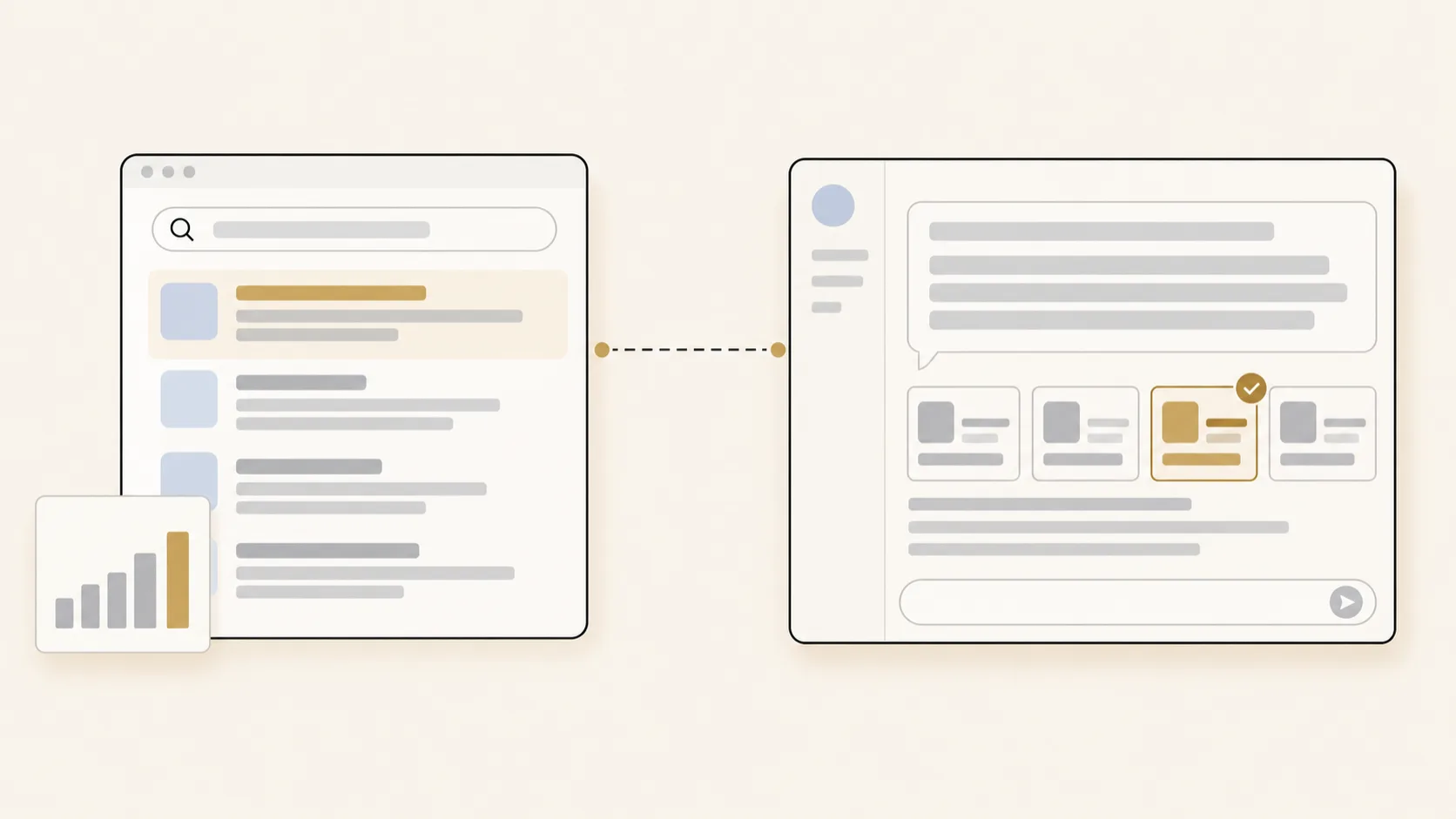
That focus is the point. Semrush answers "where do we rank and why". CLEO answers the question Semrush leaves open: "are we in the answer, and what changes it". A team shopping for more research depth should buy more Semrush. A team losing buyers to ChatGPT, Perplexity and AI Overviews is the team CLEO is built for.
The scope caps, and why they exist
Every plan is scoped so the work CLEO does on a site is work it can actually finish and prove. The exact allowance on each plan is published in CLEO's Plan Schedule at regencleo.ai/pricing.
| Constraint | Limit | How teams handle it |
|---|---|---|
| Site definition | One registrable domain (apex and www together), subject to a limit of 100 indexable pages | Larger sites move to Enterprise and Enterprise+, which raise the limit to 400 indexable pages |
| Multi-domain estates | Subdomains, country domains, and separate domains each count as a separate site | International brands scope each market as its own site, so every market gets its own monitoring and fixes |
| Engines active | 7 supported as standard, 9 on Enterprise and Enterprise+, up to 4 active per site at a time | Teams pick the four engines their buyers use most and switch as that changes |
| Query monitoring | A fixed number of queries per plan | Track the buying questions that drive pipeline, not every keyword |
| Competitor monitoring | A fixed number of competitors per plan | Track the competitors that actually appear in your AI answers |
| Keyword research | A monthly allowance | Used as input for GEO content; Semrush stays the research tool |
| Backlinking | A small monthly allowance of basic links | Link-led strategies stay in Semrush; CLEO builds citations through content and social |
| Page-level execution | Schema, meta tags, internal linking, redirects, and content mapping each capped per plan | CLEO writes these changes into the CMS itself, so the allowance is finished work, not a list of recommendations |
| Contract | Six-month minimum on all plans | Sized to the time a compounding loop needs to show results |
| Social | Sold on its own, or inside SEO + GEO + Social | Teams that want the Citation Loop joining social to AI citations choose SEO + GEO + Social |
The six-month minimum deserves its own note, because it is the term buyers ask about most. Presence compounds: a fix earns a citation, the citation earns authority, and authority earns the next citation. That loop cannot show compounding inside one month, and a 30-day judgement would measure the setup rather than the result. Six months gives the loop time to compound, and gives the buyer a full cycle in which to hold CLEO to its numbers.
Where Semrush stays the better tool
For a Semrush-heavy team the answer here is simple: keep Semrush for the jobs it was built for.
Keyword research. Semrush runs a multi-billion keyword database with volume, difficulty and competitor keyword analysis at scale. CLEO's keyword allowance is deliberately scoped as an input to its content pipeline, so the two work together rather than compete.
Backlink analysis. Semrush runs a deep backlink index with referring domain analysis, outreach tooling and gap analysis. CLEO provides a small monthly allowance of basic links as a supporting capability. Any link-led strategy stays in Semrush.
Paid media and competitive intelligence. Paid media is in beta in CLEO. Semrush's competitive intelligence is territory CLEO does not compete for.
Track record. Semrush has years of case studies across every vertical. CLEO was founded in 2026 and already runs across 208 sites in 8 countries, which is fast traction for a young product and the reason its results are published with their method attached.
How CLEO proves its results
CLEO's published evidence is first-party and measured, not asserted. On its own site, AI Readability moved from 35 to 96, SEO from 40 to 95, and GEO from 14 to 50 in 30 days. For DisburseCloud, a US payment disbursement platform, AI citation share moved from 17% to 67% over 90 days at 95% Wilson confidence.
Both results are self-measured, and neither has been audited by an analyst firm. What makes them checkable is the method: each comes with a stated confidence interval, which most of this category does not publish at all. Named customers at DisburseCloud and RMB describe the same outcomes on CLEO's testimonials page. And the result itself is easy to verify without anyone's report: ask ChatGPT, Perplexity or Gemini your category questions before you start and again after a cycle.
Where the overlap sits, and how to avoid paying twice
Technical site auditing exists in both. Schema recommendations exist in both, though only CLEO implements them directly. Content production exists in both, with different approaches. Rank data exists in both.
The mistake to avoid is buying CLEO expecting it to replace Semrush's research functions. It is not built to, and its allowances are scoped for a different job. Framed as the presence layer added on top of Semrush, the same purchase covers exactly what Semrush leaves open, and the scope caps above read as what they are: the size of the work CLEO finishes for you each month.
What CLEO does that Semrush has no equivalent for
Four things, and they are why Semrush-heavy teams add CLEO rather than replace anything.
AI citation tracking across seven engines. CLEO's GEO engine tracks whether your brand is cited in ChatGPT, Google AI Overviews, Bing AI Overviews, Perplexity, Gemini, Claude and DeepSeek, up to four active per site at a time, with Grok and Meta AI added on Enterprise and Enterprise+. It reports citation share against named competitors, not just a ranking.
The Citation Loop. Social activity data across seven platforms is mapped against AI citation data from the GEO engine, so the question "did the distribution work move the citations?" has an answer inside one system. Semrush has a social toolkit and an AI module, and they are not joined to each other. This matters because answer engines corroborate across independent sources before citing, a mechanism supported by Seer Interactive's study of 800,000 AI responses and Stacker's work on distribution and citation lift.
Autonomous server-side fixes. CLEO writes canonical tags, schema, meta tags, heading tags, and alt text directly into the CMS under your approval, rather than producing a recommendation report. For teams whose bottleneck is developer capacity rather than knowing what to fix, this is the difference between a finding and a change. Semrush tells you; CLEO does it.
GEO-structured content production. Quill produces content formatted for answer extraction, with answer-first structure and entity markup, connected to the monitoring that reports whether it worked.
The market context that makes this layer essential: BrightEdge found impressions rising while click-through rates fell sharply after AI Overviews launched, Gartner predicted a 25% drop in traditional search volume by 2026, and only 11% of domains are cited by both ChatGPT and Perplexity (The Digital Bloom, 2025). Rankings alone no longer tell a team whether buyers see them.
Who CLEO is not for
- Teams whose only gap is keyword or backlink depth. Buy more Semrush, or a rank tracker.
- Teams shopping for CRM or email. CLEO does not try to be those platforms, and paid media is in beta.
- Teams that will not publish. The loop compounds on content. Quill writes it, but someone has to approve it.
- Teams that need a verdict in under one cycle. A compounding system judged in six weeks measures the setup, not the result.
Every other team with a brand to grow across Maps, Search, AI answers, Social, Reviews and Leads is who CLEO was built for.
If you run both, divide it this way
Semrush keeps keyword research, backlink strategy, competitive intelligence, and large-scale rank tracking. CLEO takes AI answer monitoring, readability and extraction diagnostics, autonomous technical fixes, GEO content production, and the social-to-citation join. CLEO's keyword research feeds its own content pipeline rather than acting as a research tool. Teams that divide the work this way get a complete stack: Semrush to see the search market, and CLEO, the specialist AI that runs your brand's digital marketing, to grow the brand's presence in it and in the AI answers that now sit on top of it.