A brand's absence from ChatGPT recommendations is a solvable problem, but the fix runs on entirely different principles than Google rankings. The core issue is source trust breadth: the number and variety of independent, credible places where a brand gets mentioned in the context of its category. ChatGPT's visibility rate for any given brand sits at just 1.2% in 2026 (Trustmary AI Visibility data), against 35.9% for Google's Local 3-Pack. If your brand is invisible right now, you are in the majority, and the gap is an untapped opportunity. A presence engine such as CLEO can measure and build that breadth, but the principle - frequent, varied, independent mentions - is what earns the recommendation, with or without a given tool.
This guide explains why the problem persists, what source trust breadth means in practice, and the concrete off-site and on-page moves that earn AI recommendations.
Why doesn't my brand appear in ChatGPT recommendations?
The single biggest reason is that AI models don't crawl and rank the way Google does. According to Ahrefs' 2026 analysis of 75,000 brands across ChatGPT, Google AI Mode, and AI Overviews, brand search volume, not backlinks, is the strongest predictor of whether an LLM cites you, with a correlation of 0.334 versus 0.218 for backlinks. YouTube mentions showed the highest individual correlation at 0.737, and branded web mentions came in at 0.664.
Put directly: if your brand isn't discussed widely across multiple platforms, the model has little reason to surface you. Fewer than 10% of sources cited by ChatGPT, Gemini, and Copilot rank in Google's top 10 organic results for the same query (Ahrefs data reported by Erlin AI, 2026). Google rankings and AI visibility are largely separate games, and AI visibility is probabilistic rather than fixed: every time someone asks a question, the model reshuffles which sources it surfaces.
What is source trust breadth and why does it matter?
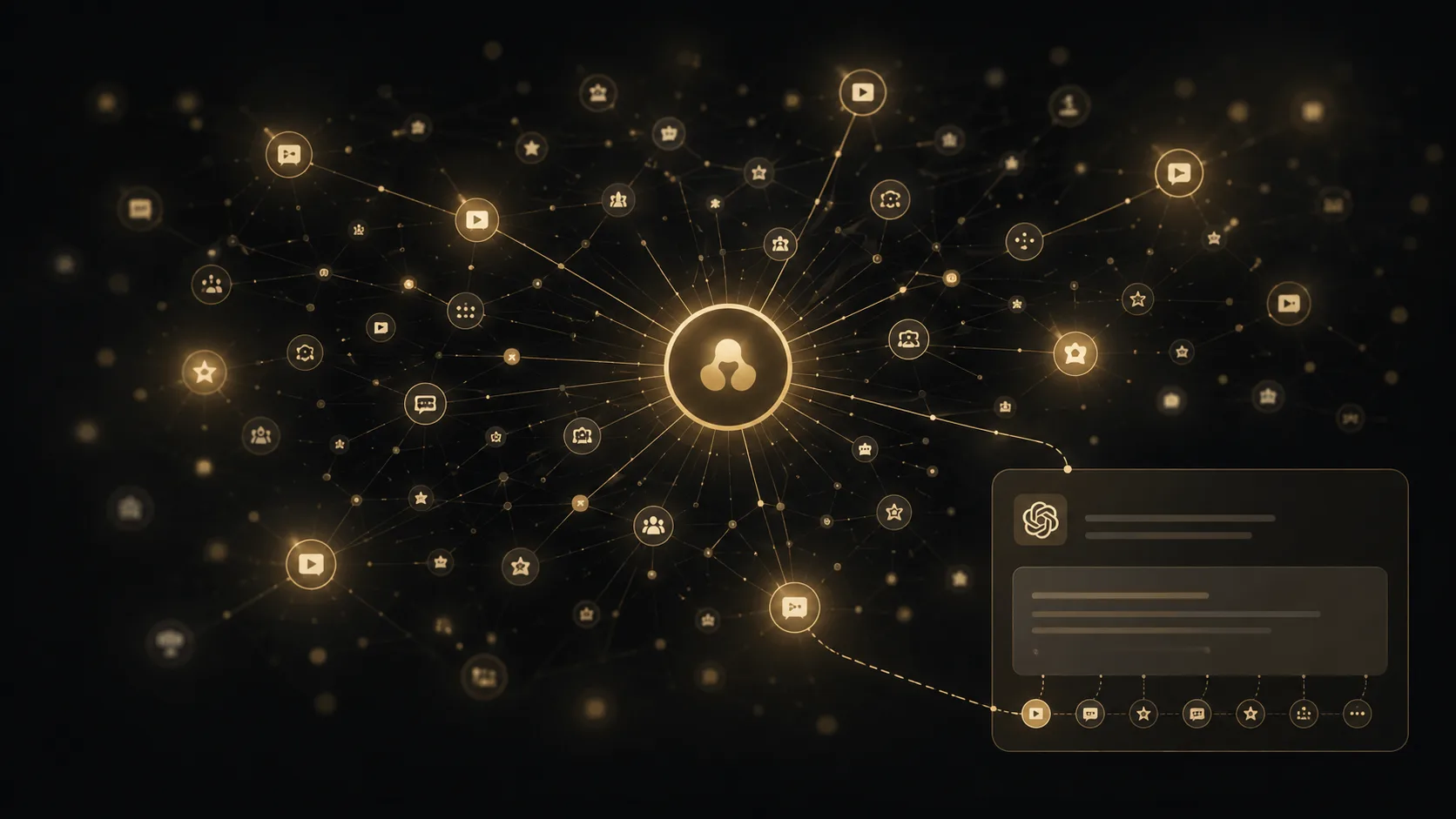
Source trust breadth is the principle that AI models recommend brands they encounter frequently, recently, and across diverse independent sources. OptimizeGEO's 2026 data found that 85% of AI brand mentions originate from third-party sources, not a brand's own website. TheDigitalBloom's 2025 AI Citation and LLM Visibility Report confirms that sites present on four or more platforms are 2.8x more likely to appear in ChatGPT responses. A related pattern - a small handful of sites disproportionately decide what AI says - explains why breadth across specific surfaces matters more than sheer count.
Consider what this looks like in practice. A B2B software company with strong Google rankings but no presence on Reddit, no mentions in industry roundups, no YouTube reviews, and no coverage on comparison platforms will likely stay invisible to ChatGPT. Meanwhile, a smaller competitor discussed across all those surfaces could appear repeatedly. The signal LLMs reward is distribution: the same story carried across many independent places, frequently and recently. This is also how brand narrative gets shaped inside AI answers - not by owned copy, but by which sources the model draws on.
Where should I start fixing my AI visibility?
Start with three concrete actions.
- Audit your off-site presence across the platforms LLMs draw from: Reddit, Quora, YouTube, industry review sites, and authoritative publications in your category. Map where you are absent.
- Pursue digital PR that earns third-party mentions. Because LLMs reference off-site content far more than a brand's own website, breadth of independent coverage moves the needle more than another page on your domain.
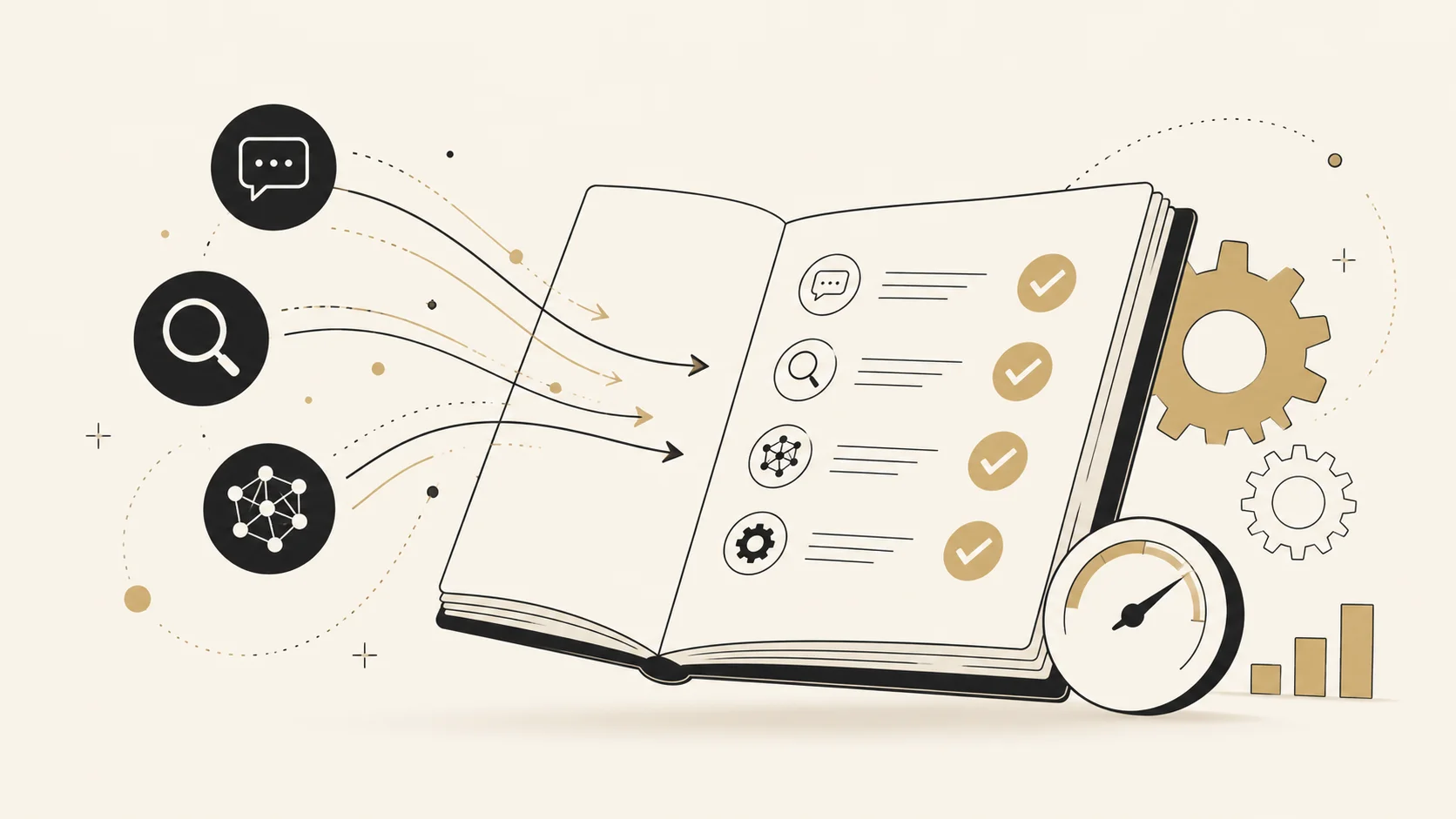
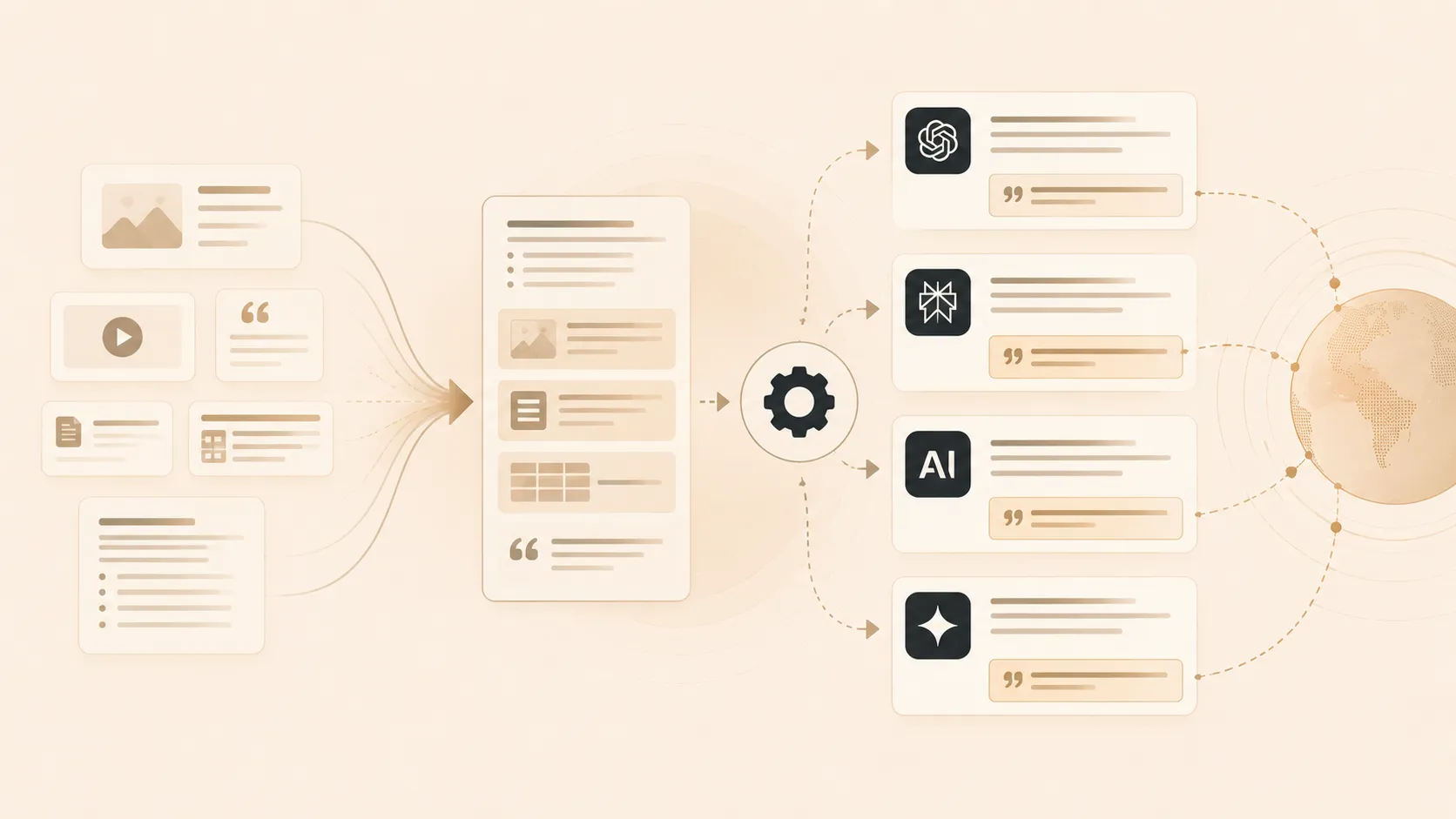
- Structure owned content for extraction. KIME.ai's 2026 analysis of 10,000 AI citations found answer-first paragraphs of 40 to 75 words are cited 3.1x more often than longer passages, and pages with tables are cited 4.2x more often than equivalent prose.
The payoff is measurable. Seer Interactive's June 2025 data shows AI-referred visitors from ChatGPT convert at 15.9%, against 1.76% for Google organic traffic, roughly 9x higher. With 73% of B2B buyers now using AI tools during purchase research (Loganix, March 2026) and 37% of consumers starting searches with AI rather than Google (Search Engine Land, January 2026), the off-site work compounds.
How does CLEO build source trust breadth?
CLEO is a presence engine that addresses both halves of source trust breadth. Its Social layer listens across X, LinkedIn, Reddit, Medium, YouTube, Quora, and Bluesky, surfacing where a brand is and isn't mentioned. Its GEO engine tracks AI citations across ChatGPT, Google AI Overviews, Perplexity, and Claude, with the AI Readability Report diagnosing extraction gaps and Content (Quill) producing answer-first, table-structured content. The Citation Loop connects social activity data to AI citation data, so the off-site and on-page work can be measured together rather than guessed at.
The evidence is documented. Building breadth and structure on its own site first, CLEO lifted AI Readability from 35 to 96 and GEO from 14 to 50 in 30 days without a single backlink or paid placement; DisburseCloud, a twelve-person fintech, then grew AI citation share from 17% to 67% in 90 days at 95% Wilson confidence. The engine runs across 300+ sites in 8 countries (plans and prices at regencleo.ai/pricing). It is one option - source trust breadth and extractable structure are what move the needle, whatever platform builds them.
Frequently asked questions
How often do brands appear consistently in ChatGPT?
Only 30% of brands maintain consistent visibility across consecutive AI search sessions (AirOps 2026 State of AI Search report, analysing 45,000 citations). Visibility is probabilistic, not fixed.
Does ranking on Google help me appear in ChatGPT?
Minimally. Ahrefs found that 28.3% of ChatGPT's most cited pages have zero organic visibility in Google. The two systems rely on different signals.
How many people actually use AI for product research?
73% of B2B buyers now use AI tools like ChatGPT and Perplexity during purchase research (Loganix, March 2026, analysing 680 million AI citations). Among consumers broadly, 37% start searches with AI rather than Google (Search Engine Land, January 2026).
Is AI visibility permanent once I achieve it?
It is probabilistic. AirOps found that 57% of brands that disappeared from one AI session resurfaced in a later one. Staying visible requires ongoing investment in source trust breadth across multiple platforms, not a single optimisation effort. Related reading: where to start when your brand never appears in ChatGPT recommendations covers the case where source trust breadth is effectively zero.
How does CLEO help with source trust breadth?
CLEO's Social layer tracks off-site mentions across seven platforms, while the GEO engine tracks AI citations across ChatGPT, Google AI Overviews, Perplexity, and Claude. The Citation Loop connects social activity to AI citation data so breadth-building and citation outcomes can be measured together.
See where your breadth runs thin. A scan at regencleo.ai/scan maps where ChatGPT and Perplexity already cite you against where your brand goes unmentioned across the platforms LLMs draw from - the gap source trust breadth has to close.