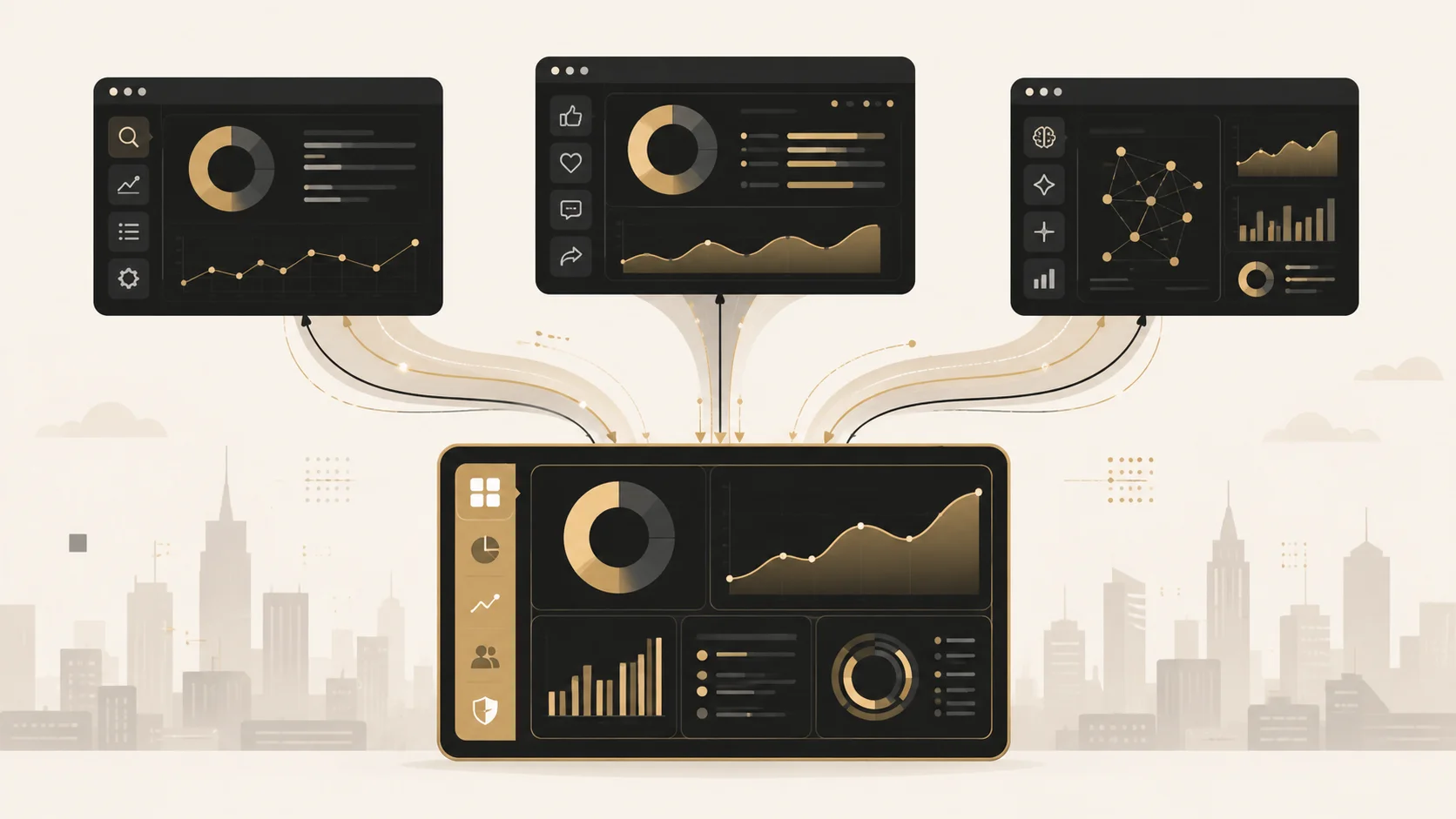
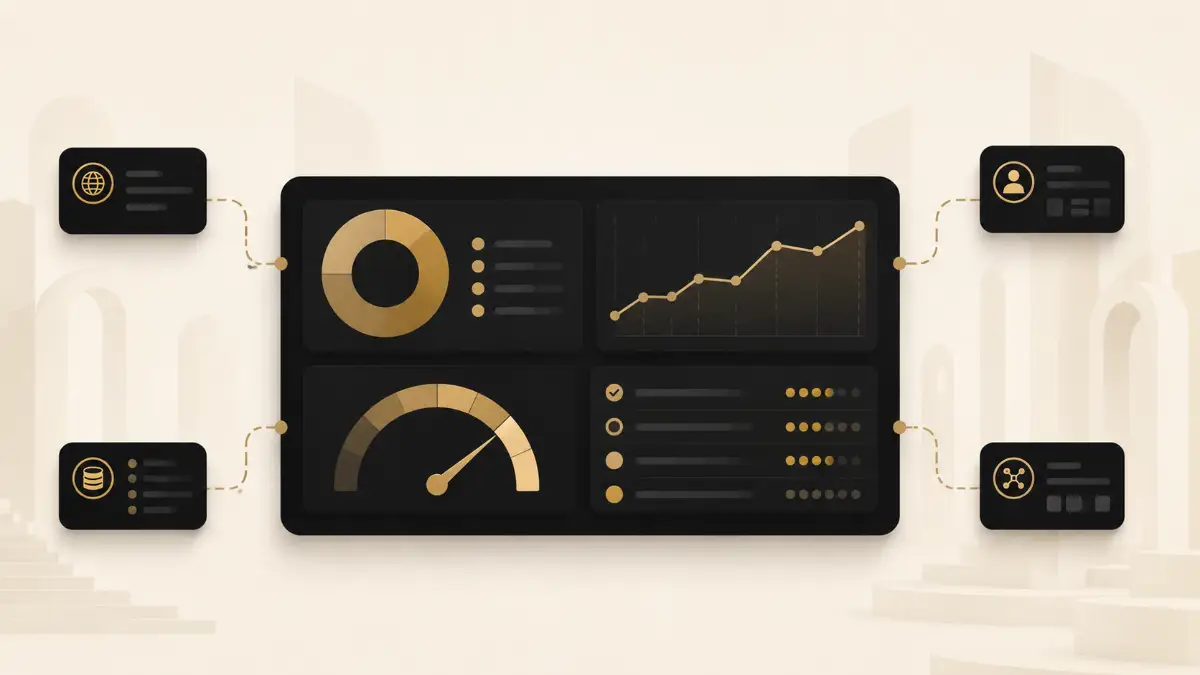
A single enterprise marketing dashboard should unify channel, attribution, performance and AI visibility data in one trusted place, so teams can measure what matters and act quickly. Fragmented tools produce fragmented decisions, and fragmented decisions carry a cost that shows up in the budget.
The problem is rarely a shortage of information. Enterprises run hundreds of applications with only a fraction integrated, and most of the marketing data they generate is never acted on. There is simply nowhere to do anything with it.
How the stack got this big
The martech landscape has grown from a few hundred solutions to many thousands, and enterprise marketing stacks now commonly run past a hundred tools. Yet marketers actively use only about half their stack, and Gartner estimates that a large share of subscription spend goes to tools nobody opens. Martech’s share of the average marketing budget has fallen to a multi-year low.
Teams were sold a point solution for every channel, every metric, every quarter. Each addressed one narrow problem while creating a larger one: context switching that costs marketers hours every day.
What unified visibility requires
Unified visibility means every channel, every attribution signal and every performance metric flows into one view that the CMO, the paid media lead and the brand strategist can all trust. It takes three things: clean data pipelines, cross-channel integration, and a measurement framework that covers both traditional analytics and AI-driven discovery.
The integration gap is the hard part. Only a small minority of organisations have integrated more than half their applications, most have undocumented data pipelines, and poor data quality carries a seven-figure annual cost at enterprise scale. It is unsurprising that most companies say they plan to simplify their stack.
The layer conventional dashboards miss
For brands that also need to know how AI engines cite and describe them, increasingly relevant as buyers use assistants to compare vendors, the dashboard has to reach past web analytics.
CLEO’s closed-loop engine monitors AI citation share across up to four engines at a time at 95% Wilson Score confidence, a measurement conventional dashboards do not produce. For CLEO client DisburseCloud, a twelve-person fintech, AI citation share moved from 17% to 67% over 90 days at that confidence level.
How to stop a dashboard becoming another silo
Choose a platform that deploys fixes, not one that only reports them. A dashboard that flags a problem and hands the fix to a six-week development backlog is a prettier silo, nothing more. Integrated measurement speeds up insight, but only when the distance between insight and action actually closes.
Frequently asked questions
Why did enterprise marketing teams end up with so many tools?
Because teams bought a point solution for every channel and every metric, each solving one narrow problem while adding to the switching cost. The martech landscape has grown to many thousands of solutions, yet marketers actively use only about half their stack, and Gartner estimates a large share of subscription cost goes to tools nobody uses.
What does unified visibility actually require?
Three things: clean data pipelines, cross-channel integration, and a measurement framework covering both traditional analytics and AI-driven discovery. Every channel, attribution signal and performance metric has to land in one view that the CMO, the paid lead and the brand strategist all trust.
Can a single dashboard also track AI visibility?
Most conventional analytics platforms were not built for it. CLEO tracks AI citation share across engines including ChatGPT, Google AI Overviews and Perplexity, measured at 95% Wilson Score confidence, which is a layer traditional dashboards do not capture.
How do you stop a dashboard becoming another silo?
Choose a system that deploys fixes rather than only reporting them. A dashboard that flags a problem and routes the fix to a six-week development backlog is a better-looking silo. The gap that matters is between insight and action.
Start with a baseline. A scan at regencleo.ai/scan reads your presence across search, AI answers and social, and returns it on one page with no login.