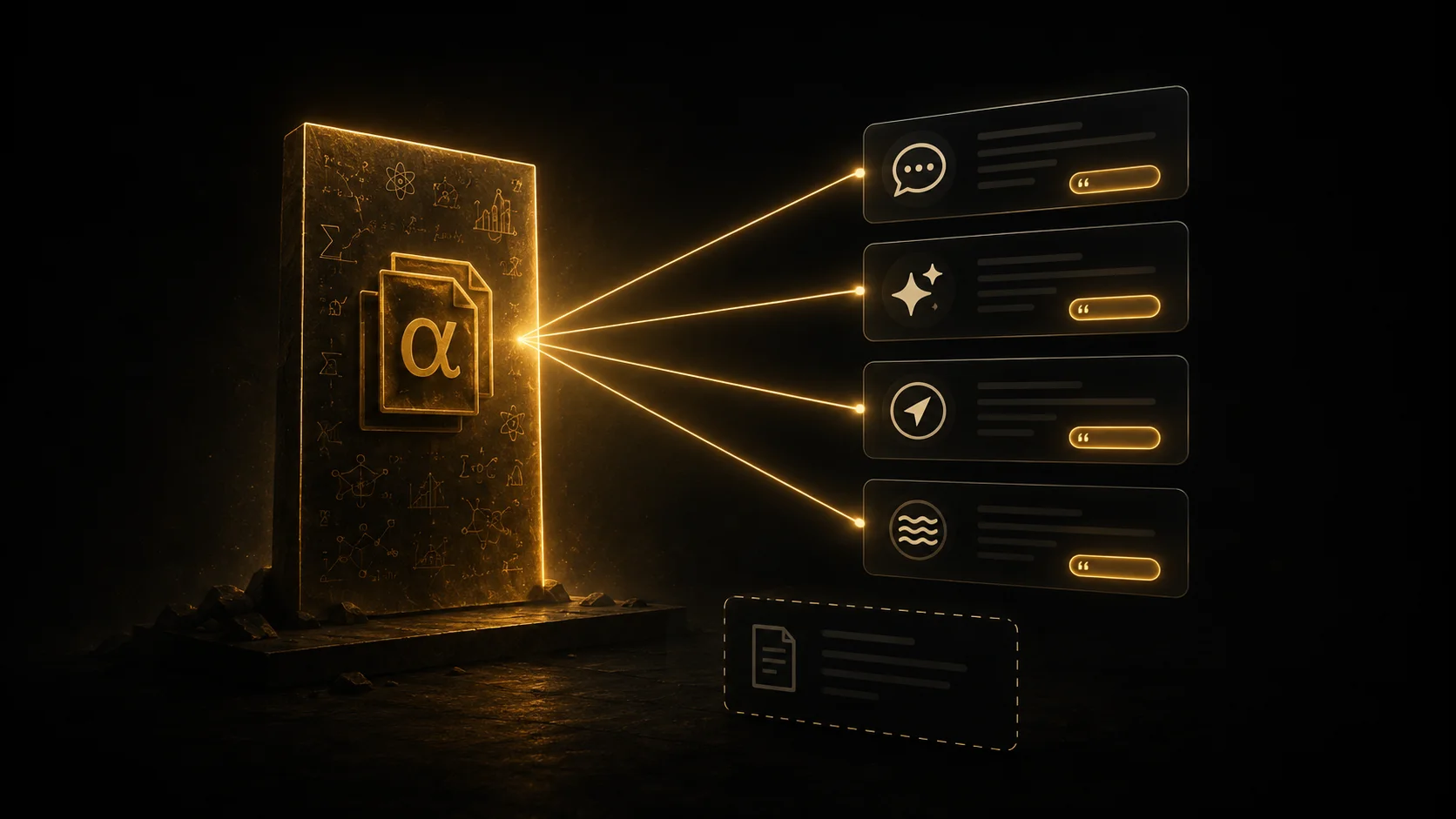
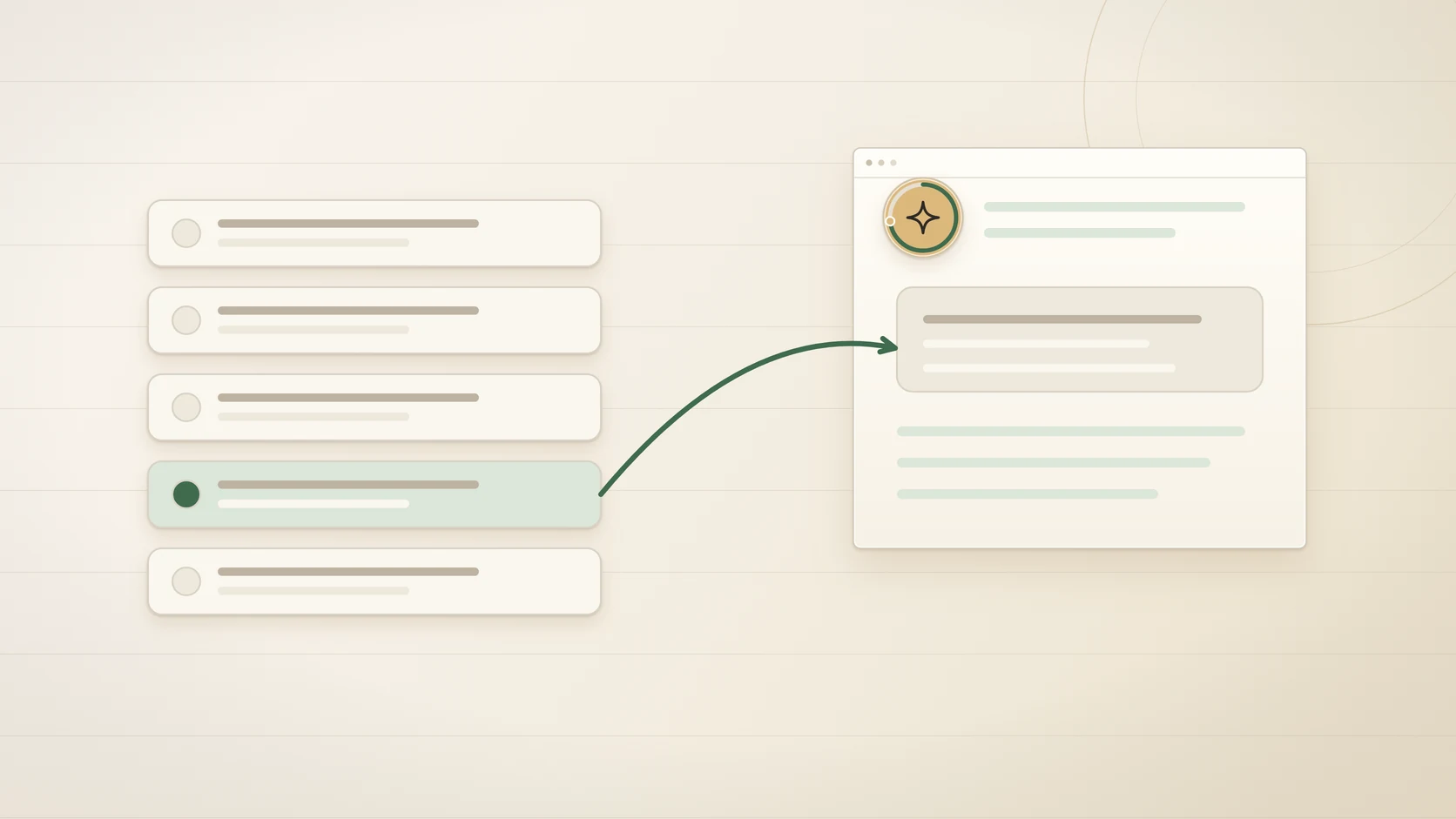
Competitors appear in AI Overviews while a brand’s own content doesn’t because ranking well in traditional search makes a page eligible for citation, but doesn’t get it selected. The two outcomes are now separate by design. A page can sit at position one and still be absent from the AI answer.
Most teams find this out the hard way. The page ranks, and the traffic report looks healthy. Then someone types the query into Google and finds a competitor named in the summary above the results. The frustration is fair. The cause is structural, and it’s fixable.
Page-one rankings no longer predict citations
Ranking and citation overlap far less than most teams assume. In its March 2026 update, Ahrefs found that 37.9% of URLs cited in AI Overviews also appeared in the top 10 results for the same query. That means most cited pages came from further down, or from outside the top 100 altogether. An earlier Ahrefs study put that share far higher. The company has since improved how it parses citations, though, so part of the drop comes from better detection rather than any change at Google.
Query fan-out explains why other pages get cited
Google’s AI systems break a single question into lots of smaller sub-queries, then retrieve results for each one on its own. This is called query fan-out. So the page that wins the headline query often isn’t the one that answers the sub-question the AI needs sorted.
A page that ranks for “best project management software” might say nothing direct about:
- pricing for small teams
- integration limits
- the effort of migrating
A competitor with a short, plain passage on each of those points can get pulled into the answer, even if it ranks lower for the main term. That first page takes the broad query but misses the pieces the summary is really built from.
In this setup, passages matter more than pages. Each section needs to stand up when it’s pulled out on its own, with the answer in the opening sentence.
Google states no special optimisation exists
Google’s own position is that no separate mechanism is involved. Its Search Central documentation states: “There are no additional requirements to appear in AI Overviews or AI Mode.” The page has to be indexed and eligible to show a snippet. That’s the whole technical requirement.
Google’s May 2026 guide to generative AI features points the same way. It calls for none of these:
- an llms.txt file
- a proprietary AI schema
- breaking pages up into smaller chunks
What counts is crawlability, snippet eligibility, and content that can’t be swapped for every other page on the topic. So the effort belongs in what a brand says and who vouches for it, not in markup.
One technical check is worth making. A nosnippet directive removes a page from consideration as an AI Overview source, so any page carrying it by accident should be corrected immediately.
What separates cited brands from absent ones
Citation tracks credibility signals off the page more than anything changed on it. Ahrefs’ analysis of 75,000 brands found that brand web mentions correlated with AI Overview visibility far more strongly than backlinks did. That is correlation, not demonstrated causation, but the gap is substantial.
Muck Rack’s May 2026 analysis of links across ChatGPT, Claude, and Gemini found that earned media made up 84% of citations. Muck Rack is a PR platform with a commercial interest in that result, so weigh it accordingly.
In practice, the competitor that appears consistently is being discussed in more places. A well-optimised page can’t fully make up for a brand that’s mentioned less often outside its own domain.
A practical order of work follows from that:
- Rewrite key sections so each one opens with a direct answer and works as a passage on its own.
- Cover the sub-questions around your main topics, not only the headline term.
- Add original data, first-hand experience, or a distinct position that competitors can’t copy.
- Build up third-party mentions in the publications and communities that AI engines index and weigh heavily.
Being cited changes which clicks a brand receives
Citation matters because AI summaries cut clicks across the board, and cited brands win back some of what’s left. Pew Research Center found that users clicked a traditional result in 8% of visits with an AI summary, against 15% of visits without one. The study tracked real Google searches by US adults.
Seer Interactive’s November 2025 analysis found that brands cited inside an AI Overview had a 35% higher organic click-through rate than uncited brands on queries showing an AI Overview, though Seer notes this does not prove that citation causes the lift. Being absent costs twice over: the summary soaks up clicks, and the cited competitor keeps more of what’s left.
Google disputes the Pew methodology. Separately, Liz Reid, VP and Head of Google Search, has stated: “We continue to send billions of clicks to websites every day and believe that Search’s value exchange with the web remains strong.” Both positions can hold simultaneously. Aggregate click volume may remain large while the share directed to any uncited page continues to contract.
Measure appearance across many runs
AI answers vary between runs, so a single check produces almost no signal. In a January 2026 study by SparkToro and Gumshoe.ai, volunteers put the same prompts through ChatGPT, Claude, and Google’s AI close to 3,000 times. The chance of the same brand list appearing twice was under 1%.
The operative metric is how often a brand appears across many runs, not whether it appeared once.
Two practical points follow for measurement:
- Since 3 June 2026, Google Search Console has offered Search Generative AI performance reports, rolled out to all websites as of 31 August 2026.
- Test target queries across many runs and engines, and record how often the brand appears.
Frequently asked questions
Why do competitors appear in AI Overviews when a brand ranks higher than they do? Ranking makes a page eligible. The AI then picks its sources by sub-question, by credibility, and by how directly a passage gives the answer. A lower-ranked competitor can be picked over a higher-ranked page if it gives a clearer answer or has a stronger third-party presence.
Is special schema or an llms.txt file required to be cited? No. Google’s documentation states that no additional requirements or special optimisations exist for AI Overviews. The page has to be indexed and eligible to show a snippet.
Is it still worth aiming for the top 10? Yes. A top-10 ranking is one input to citation, not the deciding one.
How should citation be tracked? Target queries should be tested repeatedly across engines, with frequency of brand appearance recorded across runs. One result can’t be trusted, since answers shift from session to session.
What’s the single most important change to make first? Rewrite your most important pages so every section answers one question straight away, in its first sentence. That makes passages easy to pull out, and that’s exactly what fan-out retrieval rewards. Ranking without that quality is eligibility without selection.