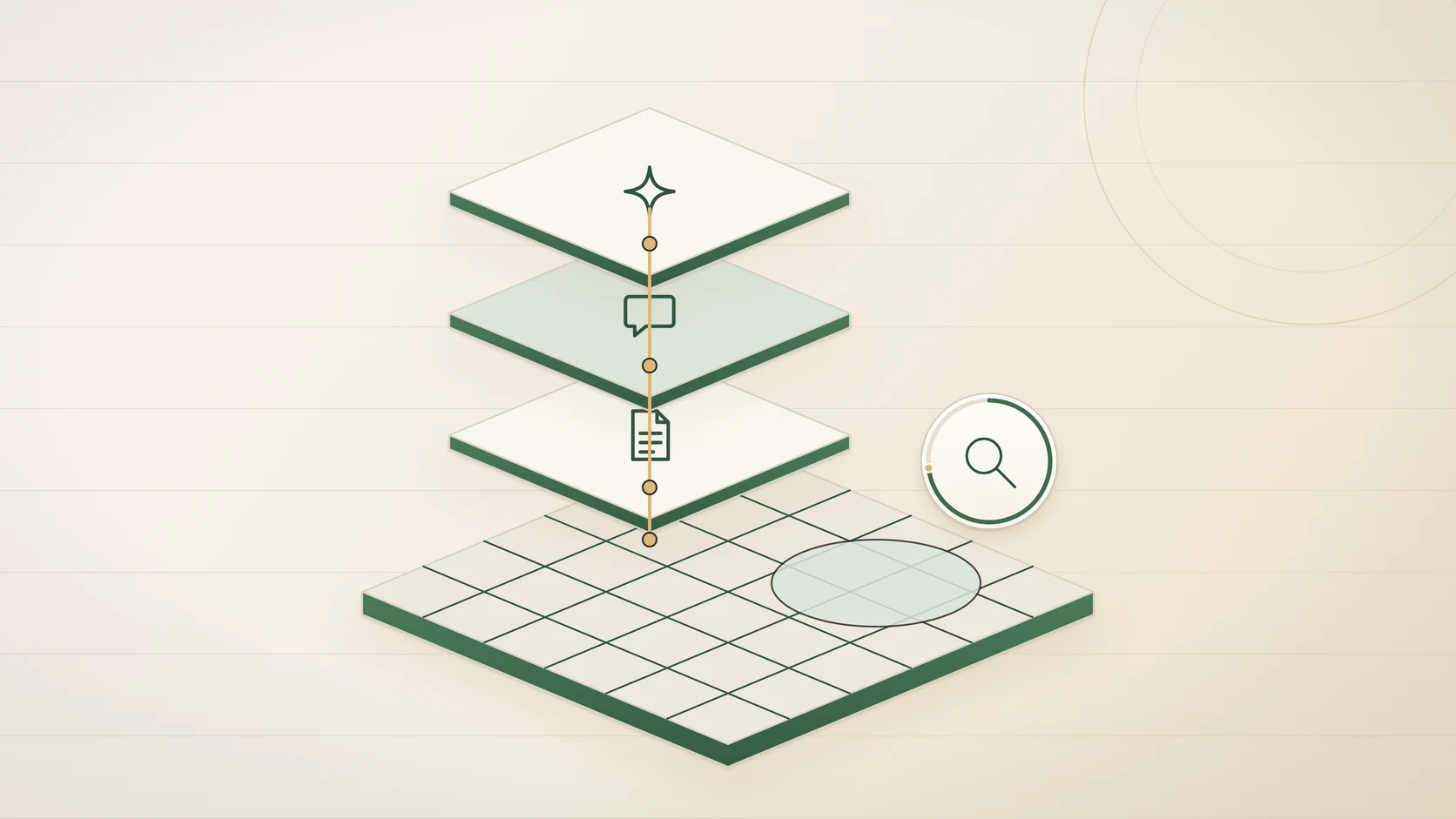
What has to be connected first in an online visibility engine is the crawl layer, the version of your site that machines actually read. The engine itself is one closed loop in which search, AI answers, content and social each feed the next. Everything built above it depends on that layer. When it is broken, strong content goes unread, and no volume of posting repairs it.
What an online visibility engine is
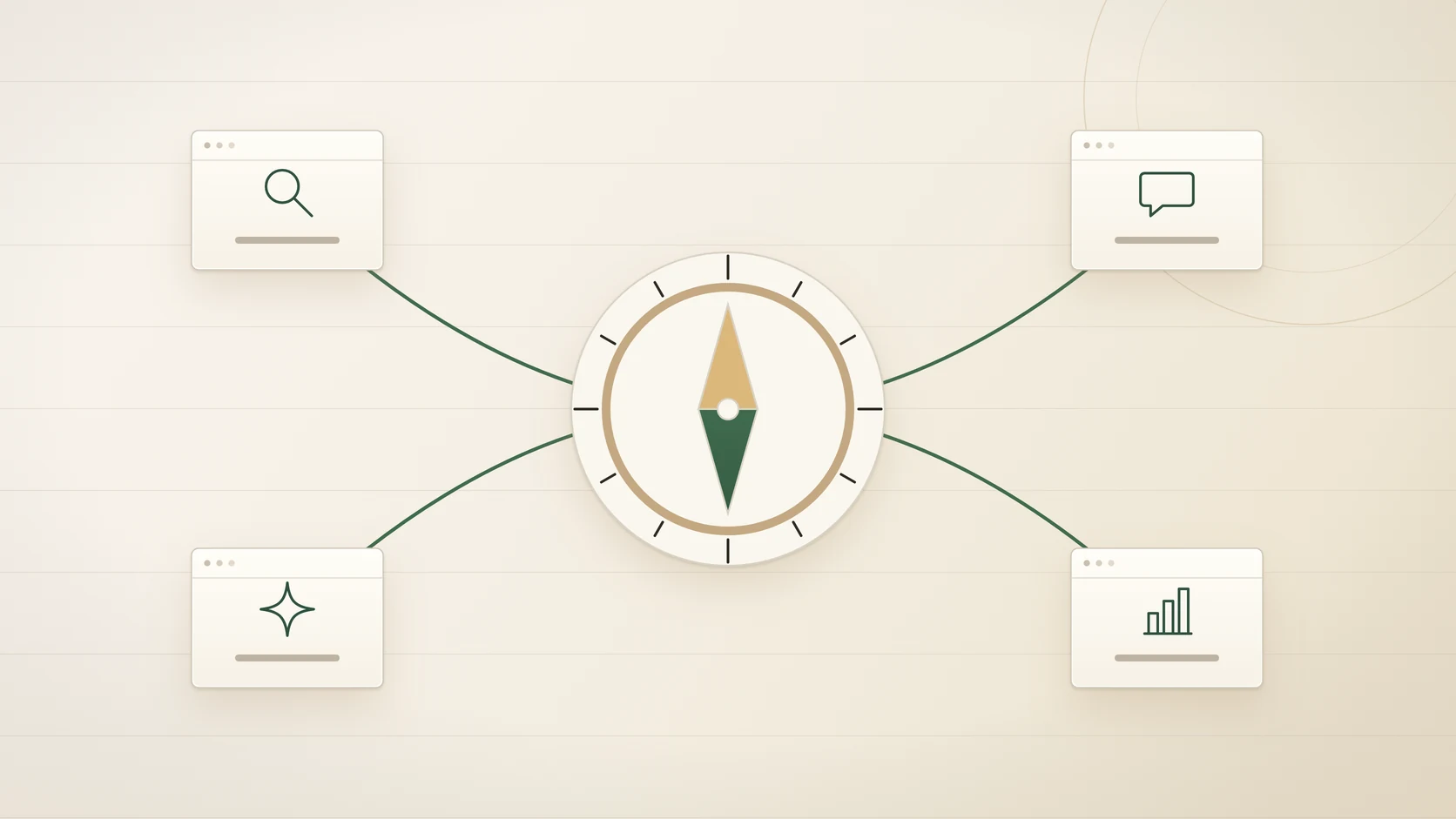
An online visibility engine is a closed system in which every surface produces something the others consume. A page that earns a citation in an AI answer becomes material for a social post. A social reply that draws engagement reveals which question the next page should answer. The loop only holds when each stage hands its output cleanly to the next.
The word “engine” carries weight here. A programme is a set of tasks someone remembers to perform. An engine runs once it is built, and people approve what it produces. That distinction determines how much of a small team’s week goes to doing the marketing work rather than to coordinating it.
Why separate programmes stall
Separate programmes stall because each one measures itself and none measures the lead. Consider the typical arrangement:
- A contractor handles search.
- A freelancer manages social.
- Someone pulls a monthly report on AI mentions.
The article that ranks never becomes a post. The thread that draws replies never shapes the next page. Three people report three numbers, and no one can say which brought in a customer.
Presence that does not produce a lead is a vanity metric. Each of these looks healthy in isolation:
- A high ranking.
- An active feed.
- An occasional AI mention.
The only test that matters is whether each one moves a buyer closer to a decision.
The crawl layer must be connected before any content or social work
The crawl layer comes first because search engines and AI engines can only cite what they can read. Crawler access, content that survives the fetch without JavaScript, clean headings and answers placed where a machine will find them: these decide whether a page can be quoted at all. Structured data helps machines parse a page, but it does not earn the citation on its own. A team can produce excellent articles and still go uncited if the underlying pages are hard to parse.
The individual fixes are usually small, but they accumulate in developer backlogs.
The order that suits a team with limited hours
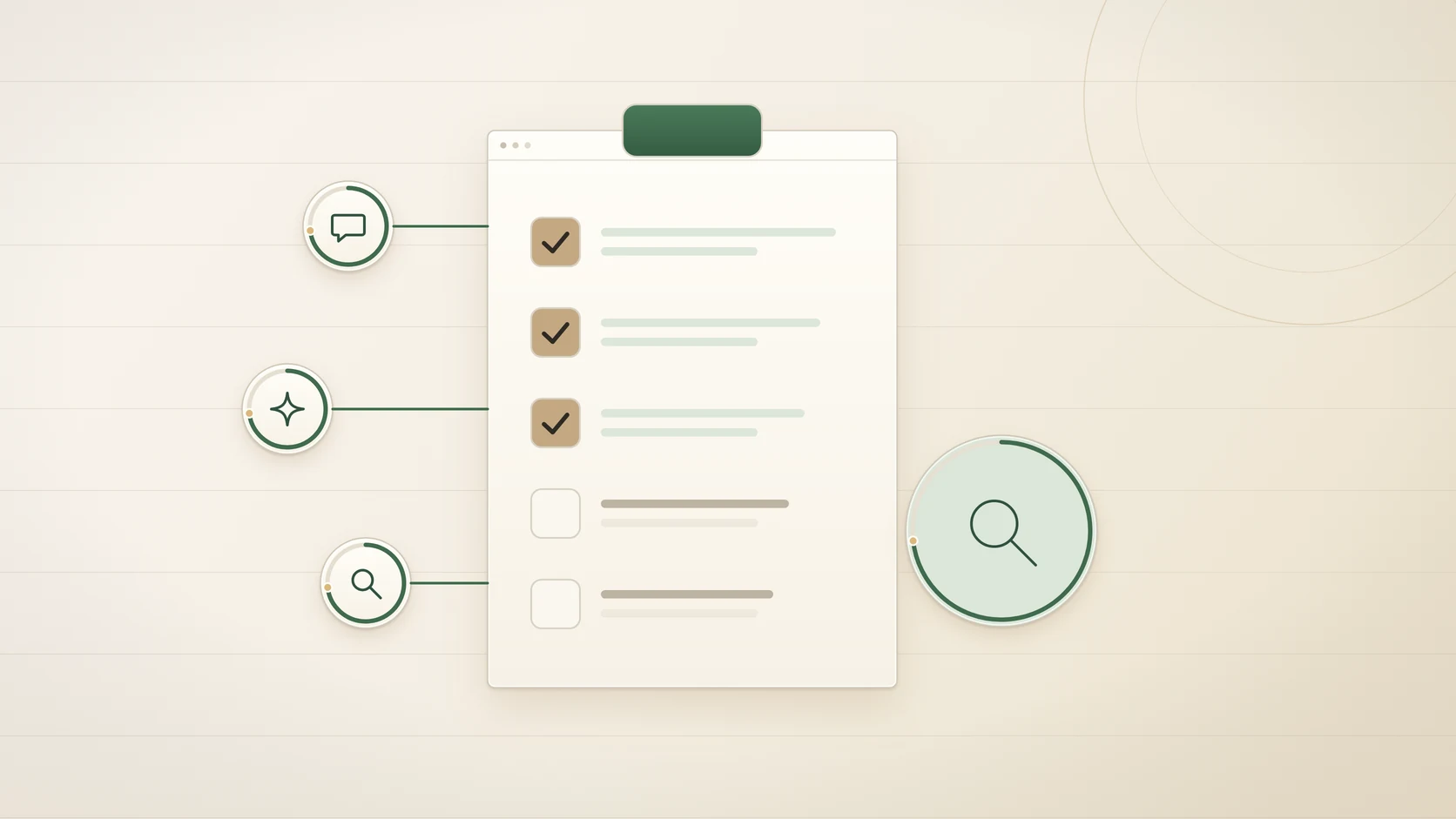
A small team should connect surfaces in the sequence where each step reduces the cost of the next. Organic first, because organic converts, then paid for reach. In practice the order runs as follows:
- The crawl layer. Fix what machines read: structure, schema, speed and page clarity.
- Local and review presence. Keep the Google Business Profile current and answer every review, because the listing and the reviews are often the first things a buyer checks.
- Content written to be extracted. Open each section with the answer, then supply the supporting detail.
- Social listening and replies. Respond where questions arise, and feed what surfaces back into the content plan.
Steps one and two give steps three and four a foundation to build from. A team that begins with social posting has no loop to feed, so the effort dissipates.
Paid work belongs after all four, once the organic path from search to lead is established. Advertising directed at pages machines cannot read and buyers cannot trust purchases only traffic that leaves.
Measuring the online visibility engine at the pipeline
An online visibility engine should be judged at the pipeline, not at the surface. Rankings, follower counts and mention totals are inputs. Leads and revenue are the output. The engine is only closed when each lead can be traced back to the inputs that produced it.
For a team with limited hours, the operative principle is to automate the work and keep the approvals. Route every action into one approval queue and log the state before and after each change. That keeps human judgment on decisions without making people the operators of every fix.
A single queue also resolves the attribution problem described earlier. When one queue holds every change, it becomes possible to see which change preceded which result.
FAQ
What is an online visibility engine?
It is a connected system that unifies search, AI answers, content and social so that each feeds the others. Its purpose is to make a brand discoverable wherever buyers look and to trace that discovery through to the pipeline.
What should be connected first?
The crawl layer. Search engines and AI engines can only cite pages they can read, so structure, schema and answer placement come before any new content or social activity.
Why do separate SEO, social and content programmes underperform?
Each reports its own metric and none owns the lead. Without shared inputs, work in one channel never strengthens another, and the team cannot determine which activity produced a result.
How can a small team run this without additional staff?
Automate the repeatable work and keep humans on approval. A single queue of proposed changes, logged before and after, allows a small group to oversee a loop that would otherwise require a full department. Start with the crawl layer and local presence, and add content and social once those are stable.