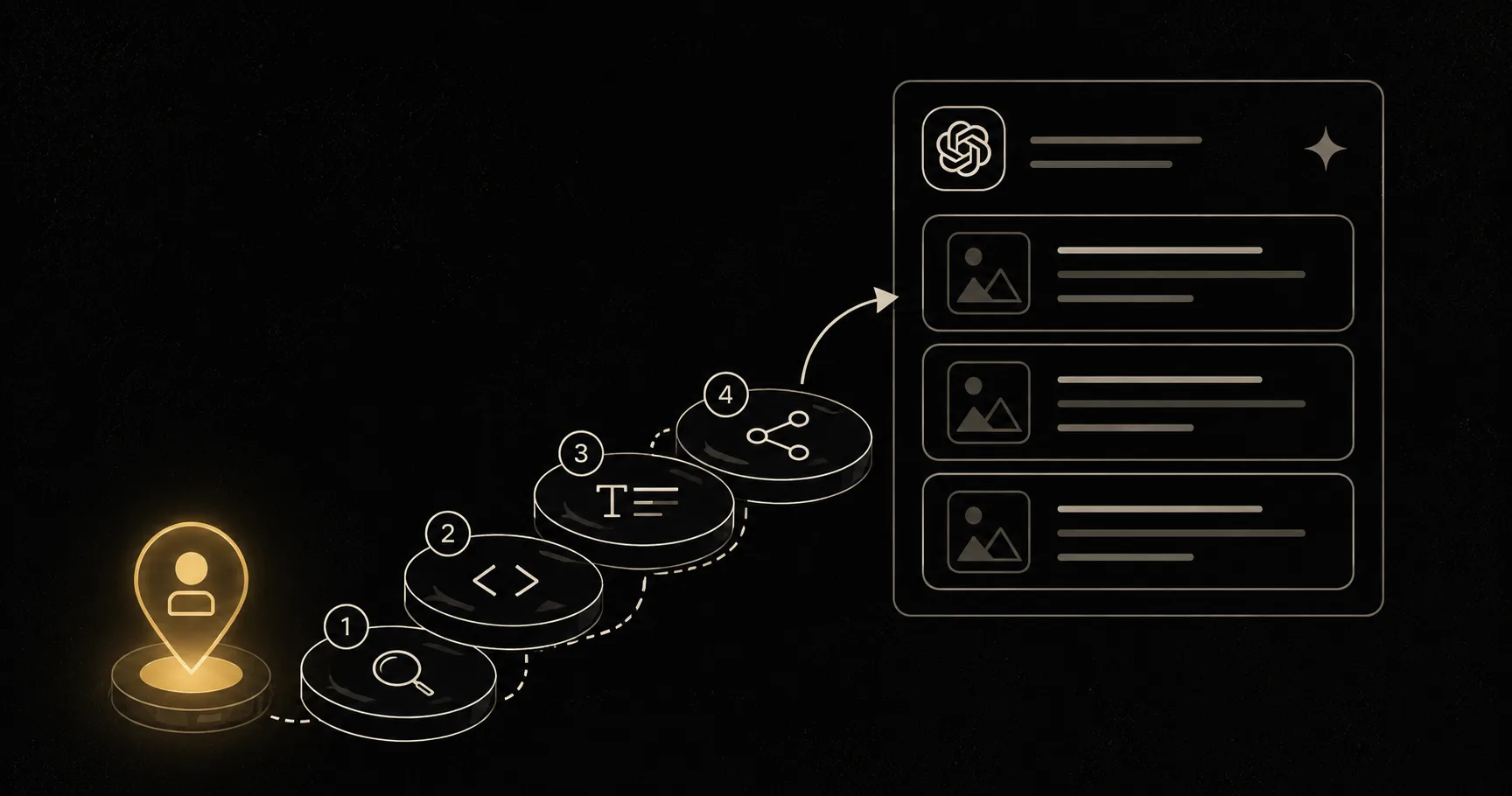

A brand reclaims the AI answer by making its facts simple for an engine to verify and attribute, then correcting the external pages the engine reads. The model writes the industry summary from whatever it can confirm. When a brand is absent, the cause is almost always a gap in what was confirmable, not a verdict on its quality. No one can guarantee a mention. The work is to remove the reasons to leave a brand out.
An omitted brand loses the first impression because the summary is the whole encounter
The summary is often the entire encounter. Pew Research Center’s 2026 Americans and AI study found that 60% of US adults report reading AI summaries at the top of search results. Pew’s 2025 behavioural study of Google visits found that users clicked a traditional result in 8% of visits with a summary, against 15% of visits without one. That gap points to a correlation, not a cause.
SparkToro and Similarweb looked at the bigger picture. In the first four months of 2026, 68.01% of US Google searches ended without a click.
Buyers feel it most acutely. G2’s 2026 Answer Economy survey reports that 51% of B2B software buyers begin research in an AI chatbot more often than in Google, and 69% selected a different vendor than originally intended after chatbot guidance. G2 describes the shift as buyers moving “from reference to inference, leveraging AI to synthesize the research process and return a shortlist.”
A brand absent from that shortlist is never evaluated at all.
Finding where your story goes missing
If you want to control the AI narrative about a brand, start by auditing the answers themselves. The gap varies by engine and by question. Answer lists also shift from run to run. SparkToro’s January 2026 research with Gumshoe.ai found that the same prompt almost never gives you the same list of brands twice. One answer proves little, repeat the check and count how often the brand appears.
- Ask the questions a buyer would ask about the category. Do it across several engines, and more than once.
- Note whether the brand’s name appears, how it’s described and which pages are linked.
- Check each description against the brand’s own stated facts, then sort the problems into wrong claims and missing ones.
- Note which external sources the engines cite for competitors but never for the brand.
Missing claims almost always outnumber wrong ones. An engine that finds nothing to confirm tends to fill the silence with inference, or with a competitor.
Plain statements on owned pages let a brand control its AI narrative
An engine can only attribute what a page states directly. Put the fundamentals near the top of the pages that matter, in short, plain sentences:
- What the business is and who it serves
- Where it operates
- What it offers and how it operates
Give each product and service one name, and stick with it everywhere.
Next, the machine-readable layer has to match. Your titles, descriptions and structured data need to line up with the text people can see. They also need to be in the page the crawler fetches, not added afterwards by a script.
Press on the claims a buyer would test. A sentence that names a specific capability, location or audience gives the model something to cite. A sentence calling the business a “leading provider of solutions” gives it nothing to work with.
Correcting the third-party sources the answers draw from
Engines read well beyond a brand’s own site. Reviews, directories, forums, encyclopedia entries and press coverage all feed the summary. G2 reports that citations from review sites are the strongest signal behind buyer trust in a chatbot’s recommendation. Studies of citations don’t agree on which outside source dominates, and the mix changes from month to month. Depending on just one platform is a risk.
The durable correction is consistency. The same few habits apply across every outside source:
- Use the same name, category and description on every listing and profile.
- Claim profiles that were unclaimed.
- Correct errors at the source rather than arguing them out with the engine.
Replies to reviews should be specific, since a reply is text the engine can read. Citation share should be measured using statistical confidence intervals. A single answer is just anecdote, and only repeated sampling shows whether a correction held.
What Google has confirmed and what it’s still testing
On 15 October, Google announced that source links would be made more prominent in AI Mode and AI Overviews. That change is confirmed. A block of official pages is a separate feature that’s still being tested, and its final form and reach may change.
Prominent links make a page worth more when it’s clear, attributable and easy to confirm. They won’t guarantee inclusion, and nothing Google has announced promises any brand a specific placement. Build your plans on the change that’s confirmed, and think of the feature still being tested as a fallback.
Common questions
Why does an AI answer leave a brand out? The usual cause is that the engine could not verify or attribute enough about the brand. Thin pages, inconsistent listings and absent external coverage all give it less to work with than competitors provide.
Can a brand be guaranteed a place in an AI summary? No. Answers are generated, so they change from run to run and vary between engines. A brand can make itself easier to confirm and cite, and it can track how often it shows up. What it can’t do is secure a fixed position.
Is the official-pages block in Google’s AI features live? Google’s still testing it.
How often should you run the audit again? Once a month is a sensible pace. Answers move as engines and sources change. Repeating the audit regularly shows whether your corrections to pages and listings are working.
Running that audit by hand, every month, across several engines, is the part most teams let slip. CLEO by RegenAI does it on a schedule: it puts each tracked question to the AI engines six days a week, across up to four engines per site out of seven supported (nine on Enterprise and Enterprise+), writes the corrections into the page the crawler fetches rather than layering them on with a script, and routes every change into one approval queue before anything goes live.
Begin with the audit above. Fix the plain statements on your three most important pages, then bring every listing into line before you try anything fancier. If being present doesn’t produce a lead, it’s a vanity metric. The work described here is what separates presence from position.