
Customers/RMB
An agency running 46 Dubai client sites on Orbit for SEO.
One engine, one approval queue, forty-six client sites. What changes when the tickets stop.
By CLEO - RegenAI · Published
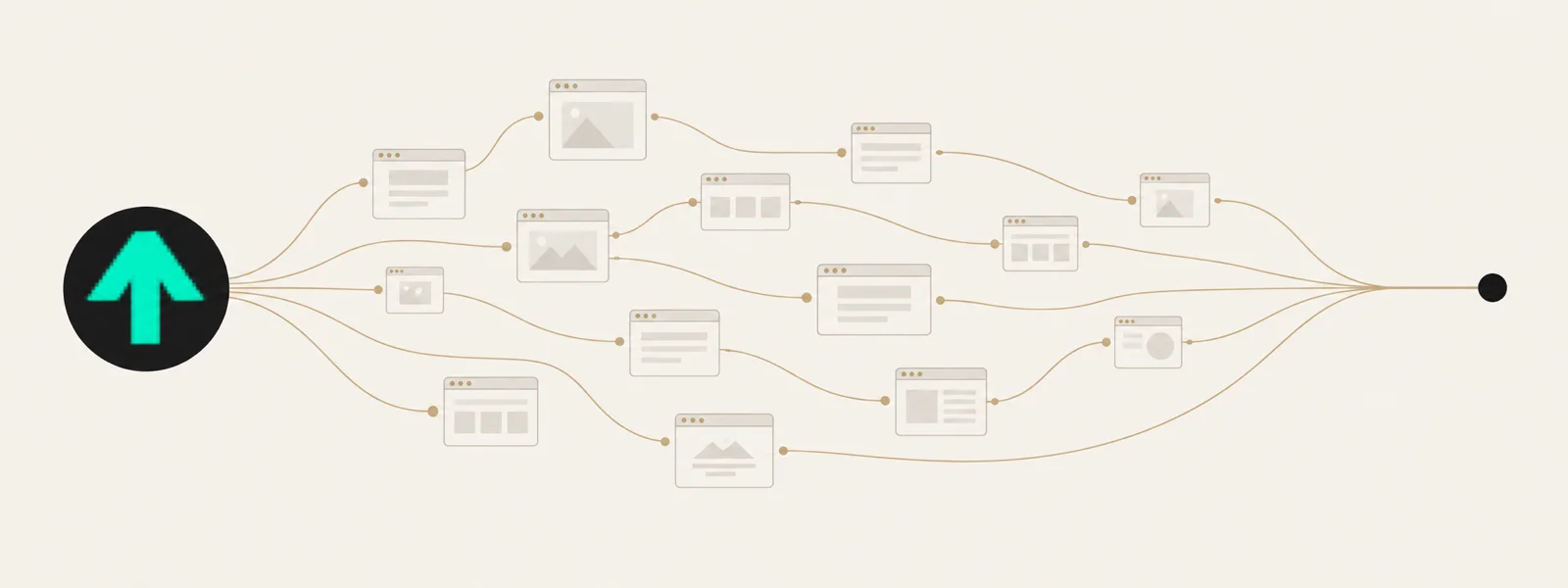
RMB is a digital marketing agency based in Dubai. It runs SEO for 46 client sites on CLEO Orbit: audits on schedule, fixes written server-side into each client's CMS, and every change routed into one approval queue rather than a developer ticket per site. The agency keeps the client, the brand and the relationship; CLEO runs the work.
Forty-six sites is not one problem repeated forty-six times. The sites sit on WordPress, Wix and Shopify, each with its own logins, its own release habits and its own developer, or no developer at all. An audit that takes an hour to run takes a week to act on, because acting on it means writing a ticket, explaining the fix to somebody who did not read the audit, and waiting. Multiply that by forty-six and the agency's real constraint is not knowing what to fix. It is the queue between knowing and doing.
That queue is where an agency's margin goes. The retainer's largest line is specialist time, and specialist time is spent describing work rather than doing it. What follows is what RMB's own practitioners say changed once the describing stopped.
Client sites running on CLEO Orbit.
The surface RMB runs on Orbit for its clients today.
Autonomous mode, approval-gated, one queue for every site.
Method
The reported facts here are the site count, the surface and the mode. This is an operational account rather than a measured before-and-after, so no score or percentage is published for RMB's engagement. The rest is the practitioners' own words, quoted verbatim.
The ticket disappears, and the account list grows.
The first thing to go was the wait. An audit that surfaces a broken canonical, a missing title or a redirect chain used to produce a ticket; now it produces a queued change the specialist approves. The person who found the problem is the person who ships the fix, on every one of the forty-six sites, without learning forty-six deployment processes. Capacity is the visible result: the constraint on how many accounts one manager can hold was never their judgement, it was the queue.
“I'm managing more accounts than I used to a year ago. The work got faster, because the whole process of raising a ticket and waiting for a developer has gone. If something needs fixing, I do it myself through the platform.”
The fix is written into the site, not painted over it.
Where a fix lands decides whether it lasts. A change injected by a script tag exists only while the script runs, and disappears the day the tool is removed. CLEO writes into the CMS itself, so the corrected tag, heading or redirect is part of the client's own source. It survives the next deploy, the next audit, and CLEO. For an agency this is also a handover question: work written into the client's site is work the client keeps.
“Changes made by CLEO to a site are not cosmetic (transient); they are written in CMS (permanent).”
Voice that survives being scaled.
Content is where agency scale usually breaks. Forty-six clients are forty-six voices, and the usual compromise is a house style that sounds like none of them. Quill sets a brand voice once per client and carries it, so drafts arrive sounding like the client rather than like software, and they publish to the site from the same place they were written. The editing pass shortens, which is the part that actually costs hours.
“Every content tool I'd used before wrote like an AI. You could always tell, and it never really carried the essence of the brand. CLEO's the first one that does. Whatever it produces comes back sounding like the client rather than like software. Now I rewrite less and publish to the site directly from CLEO.”
From absent in AI answers to cited.
SEO was the surface RMB brought to Orbit, but the engines that read those sites had changed. Most AI crawlers do not run JavaScript, so a site whose structure exists only after scripts execute is a site most answer engines cannot read. Fixing readability at the source is what moves a brand from absent to quoted, and the timescale is weeks rather than the quarters traditional link building implies.
“Amazing. From AI invisibility to citation in 8 weeks.”
Citation that arrives as pipeline.
Being named in an answer is a visibility result. What an agency is judged on is whether visibility reaches the client's sales conversation. Traffic arriving from AI engines behaves differently from search traffic: the reader has already had their question answered and arrives further down the decision, which is why a small number of visits can carry disproportionate weight.
“I could not believe when I saw AI referred traffic through CLEO helped our client close two deals in a month.”
The surfaces stop being separate tools.
Social was the surface that proved the point about one queue. Consolidation alone would have saved time, but posting is the smallest part of the work; the listening, the replying and the reading of what is actually growing are the rest of it. Running them beside SEO in the same approval queue, in the same brand voice, means the social layer amplifies what the other surfaces earned instead of running as a separate campaign.
“Having social media platforms in one place would have been enough, and it isn't only posting. It's the following, the engaging, actually being able to see what's growing. Then on top of that, every comment and post it suggested by CLEO in brand voice is truly helps.”
Forty-six sites. One approval queue. The agency keeps the client; CLEO runs the work.