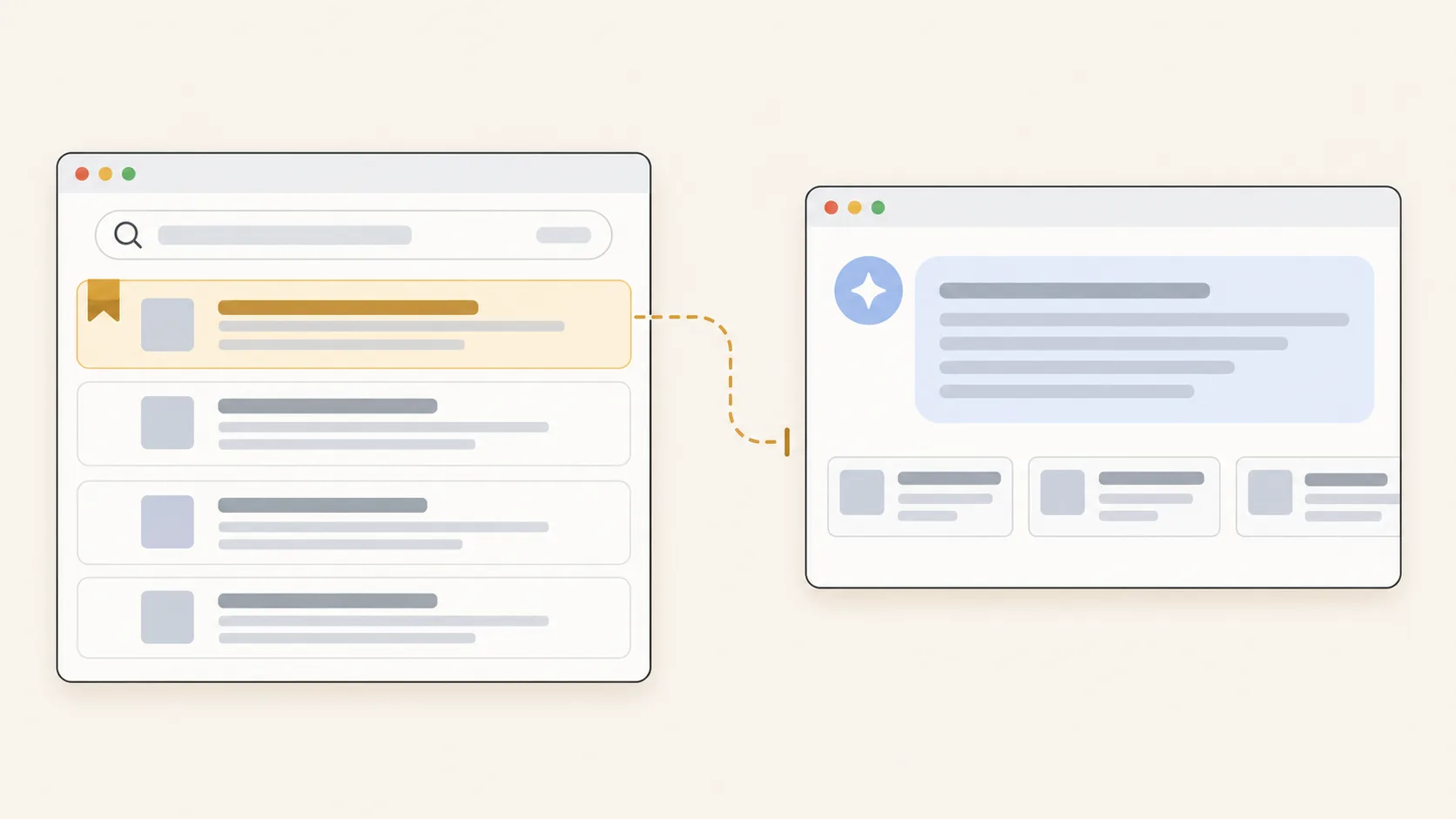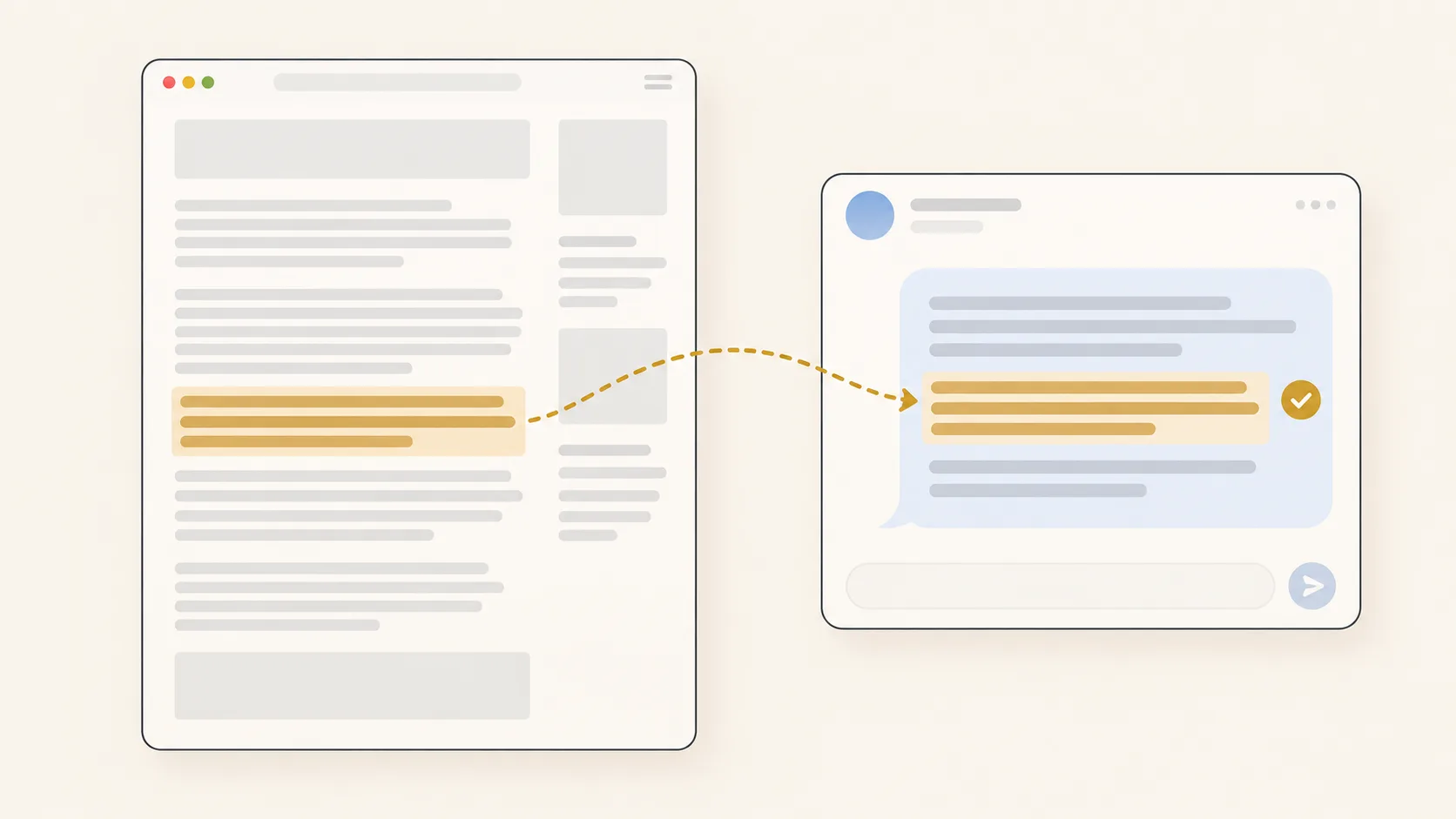

An AI SEO platform earns its fee when it edits live pages and then measures the result. A reporting-only tool flags the problem and then leaves the fixing to whoever bought it. CLEO by RegenAI is built around the other approach, so it is the kind of product these five questions are designed to test. Every product in the category can show where a brand appears in AI-generated answers. What separates them is what happens once that finding is in. Call the distance between a finding and an actual change on a live site the action gap. The five questions below show just how wide it is.
Why the action gap costs more than it used to
Unfixed findings carry a higher price now because fewer searchers reach a site at all. A Pew Research Center study by Athena Chapekis and Anna Lieb tracked US adults’ Google searches in March 2025 and found a traditional result was clicked in 8% of visits when an AI summary appeared, against 15% when it did not. Just 1% of visits included a click on a link inside the summary itself.
A reporting tool that flags the same visibility problem week after week, with no way to resolve it, keeps charging you for the same bad news.
Question one: measurement across many prompts
Find out whether visibility is reported as a percentage across a large set of prompts or as a rank for a single prompt. The second is close to meaningless. SparkToro co-founder Rand Fishkin found that AI tools return the same list of brands fewer than once in 100 runs of the same prompt. His conclusion was that a visibility percentage across many prompts is a reasonable guide to how a brand really shows up, where a single answer is not.
A platform that hands back “position 2 for this prompt” is passing noise off as signal. Ask how many prompts sit behind each number, and how often they’re re-run.
Question two: diagnosis that points at a cause
A score names a position. It does not name a reason. Ahrefs studied 75,000 brands and found that YouTube mentions correlated most strongly with AI visibility, ahead of branded web mentions. The Next Web reported the findings, along with Ahrefs’ own warning that correlation isn’t causation.
The practical reading is direct. Most of what moves AI visibility sits off a brand’s own domain. A measurement report can’t change any of it just by being produced. Ask what the platform names as the cause of a gap, and whether a person or the tool itself can do anything about it.
Question three: what the platform can actually change
Establish where the tool has write access. A platform that fixes things acts in at least one of these places:
- Page copy and structure, edited inside the content system
- Technical corrections, including metadata and indexing problems
- New content written against a named gap in coverage
- Replies and posts on the third-party surfaces that AI engines cite
A tool that only produces a to-do list for each of these is a reporting tool with good manners. A tool that does the work still needs scrutiny, and that’s what the next question covers.
Question four: approval, logging and reversal
Autonomy without governance is a liability. Ask who signs off on a change before it goes live, whether every action is logged with the page as it was before and after, and whether a bad change can be reversed quickly.
Treat the word “autonomous” with suspicion when there’s no evidence to back it up. Get the vendor to walk you through one change, from request to approval to live result. If all a vendor can show you is a demo environment or a screenshot of a recommendation, they’re describing the action gap rather than closing it.
Question five: re-measurement against a named cause
The last test is whether the platform measures the effect of what it does. A credible answer includes:
- A baseline captured before the change
- The same prompt set run afterwards, with a stated level of statistical confidence
- An honest account of what else changed in that time
Be careful with any vendor who promises a specific outcome. AI answers change from run to run, as Fishkin’s research shows. So a guaranteed ranking or citation tells you more about the sales pitch than the product. A stronger claim is a measured lift, shown with its method, on a site you can inspect directly.
Reading the answers together
The five questions work as a set. Platforms usually fit one of three patterns:
- One measures precisely and still leaves the action gap wide open. That describes most reporting suites on the market.
- Another moves quickly but measures poorly, so you can’t tell if the changes helped.
- A strong candidate answers every question without dragging the conversation back to features.
Ask every vendor the same questions in the same order, and write the answers down. That includes CLEO by RegenAI: ask it to walk you through a change from request to approval to live result, as question four describes, and judge it on what it can show you. Its published answers: it puts each tracked prompt to the AI engines six days a week, across up to four engines per site out of seven supported (nine on Enterprise and Enterprise+), and reports citation share with a 95% Wilson confidence interval. It writes fixes server-side into your own site. Every action routes to one approval queue, where you can approve, reject or request changes, schedule or publish, and roll back. A comparison built that way tells you more than any ranking page, because those pages are very often produced by the businesses they rank.
A platform is only as good as the last change it made and could prove.