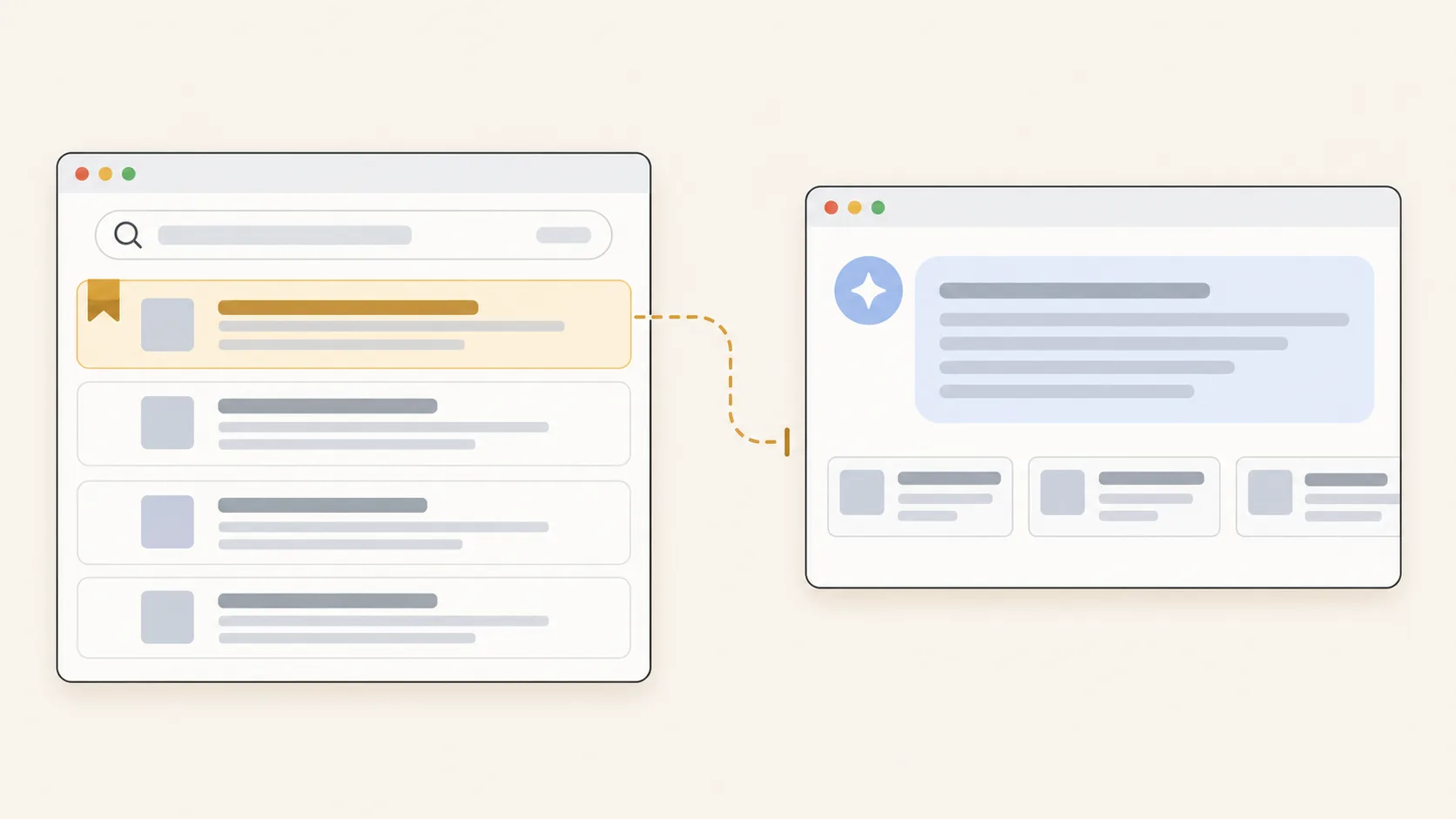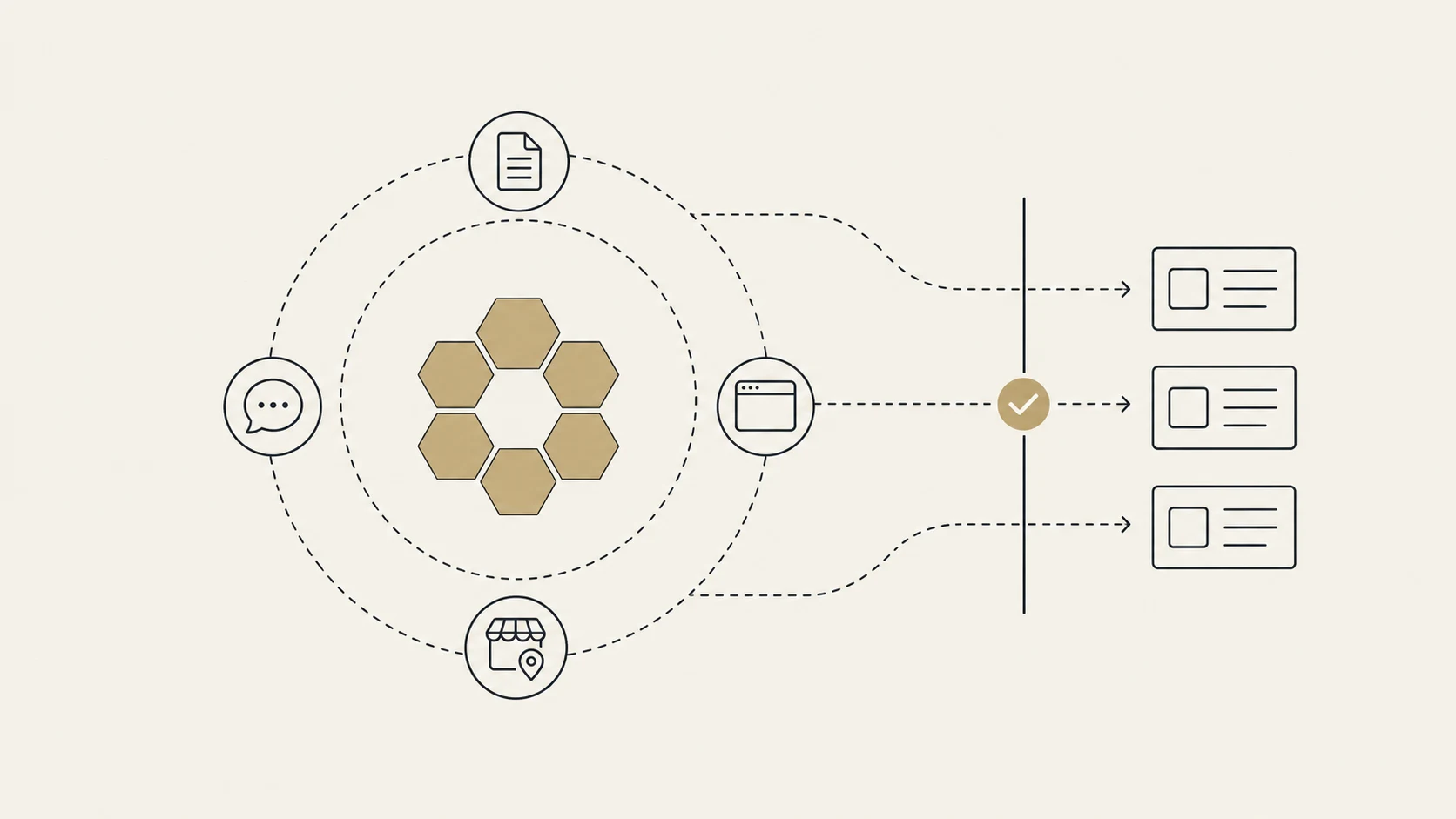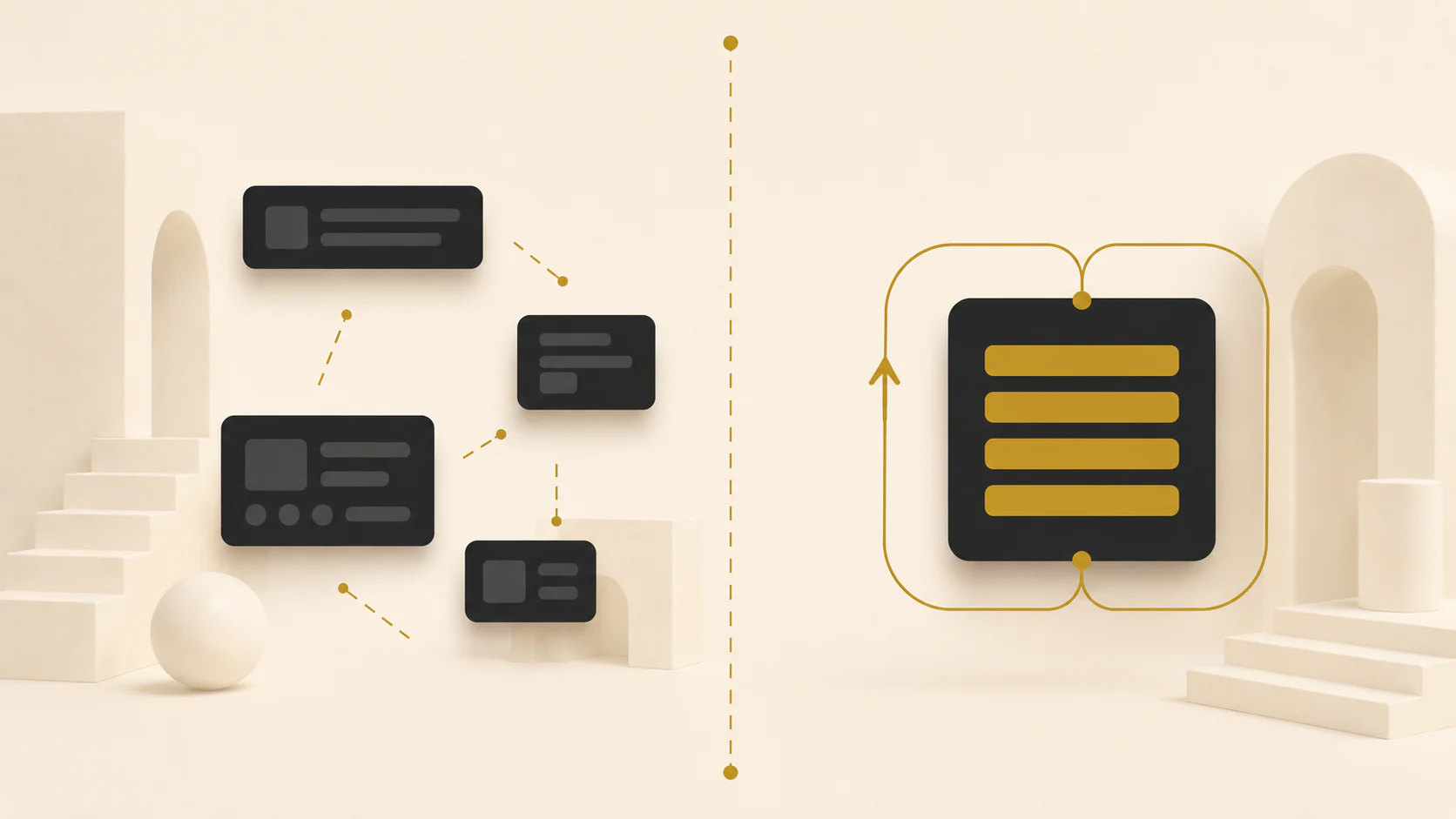
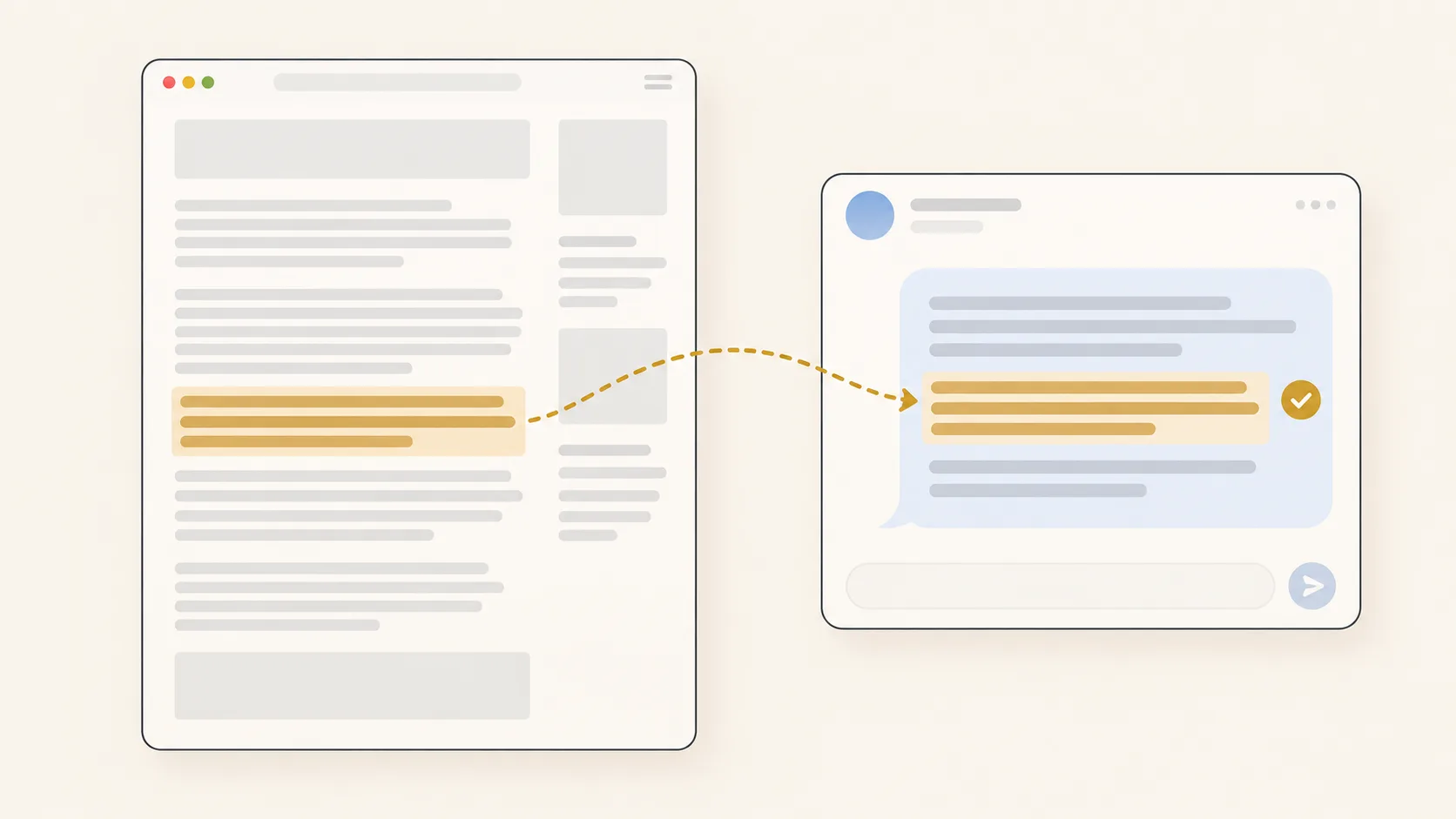
If a page ranks on page one of Google but ChatGPT never quotes it, the cause is almost always on the page itself, and you can find it with a short audit. Google ranks whole pages; ChatGPT and other AI answer engines lift single passages (how the two pipelines differ). So the audit asks one question at each step: can an AI system reach this page, find the answer, and quote it with confidence? Run the seven checks below in order, because a failure early in the list makes everything after it irrelevant.
Check 1: Is the page actually not cited?
Start with evidence, not a hunch. Take the questions the page ranks for, ask them in ChatGPT, Google AI Overviews, Perplexity and Gemini, and record which URLs each answer cites. Use informational, comparison and best-of phrasings, not just branded searches.
Turn that into a number: AI citation share, the percentage of answers that cite your page or domain. For example, 40 questions across four engines gives 160 answer opportunities; if you are cited in 24, your baseline is 15%. Keep the same question set and cadence afterwards, so a change in the number reflects your fixes rather than noise. If you want this without the spreadsheet, CLEO’s free Presence Scan gives a no-login baseline.
Check 2: Can AI crawlers reach the page?
Open your robots.txt and confirm it does not block the AI crawlers you want to be cited by, such as GPTBot and OAI-SearchBot (OpenAI), ClaudeBot (Anthropic) and PerplexityBot. A page that blocks them can rank on Google and still never be retrieved by those engines.
Check 3: Is the answer in the HTML the server sends?
Many AI crawlers do not run JavaScript. If your answer only appears after client-side rendering, Google may index it while an AI crawler sees an empty shell. View the page source, not the rendered page, and search for your key sentence. If it is missing, the fix is server-side rendering for that content. See JavaScript Websites Are Invisible to ChatGPT for the detail.
Check 4: Does the answer lead its section?
Find the sentence that answers the question the page ranks for. If it sits in the third paragraph, after context and caveats, a retrieval system scanning for a quotable reply will move on. Move it to the first sentence under the matching heading, before any qualification. Keep the supporting depth after it; you are reordering, not cutting.
Check 5: Does each section stand on its own?
Read one section in isolation. If it says “as we mentioned earlier” or only makes sense after the paragraph before it, it cannot be lifted out cleanly. Rewrite each section so that, if an engine quoted only that section, the reader would still get a complete, accurate answer. Headings should state what the section says, and bullet points should isolate comparisons rather than burying them in prose. For the writing side in depth, see Writing for extraction: how AI chooses which passage to quote.
Check 6: Is the claim stated anywhere else?
AI engines lean towards claims that other sources agree with, because agreement lowers the risk of stating something wrong. Search for your page’s central claim in similar words elsewhere on the web. If only you say it, the engine has less reason to trust it. The fix is off-site: earn mentions, reviews and references that state the same fact. Corroboration: Why Answer Engines Cross-Check Before They Cite explains how.
Check 7: Are the claims sourced and dated?
A number without a source or a date is harder to quote with confidence. Put the source and date in the sentence itself, not in a footnote. The research agrees. The Princeton-led team behind GEO: Generative Engine Optimization (Aggarwal et al., KDD 2024) measured gains of up to 40% in how visible a source was in generative answers when it cited its sources, added quotations and added statistics.
After the fixes: measure again
Re-run the same question set from check 1 on the same cadence and compare citation share with your baseline. Expect on-page fixes to show in weeks and corroboration to take months, and judge the result on the full set rather than one answer. A published example: for CLEO’s client DisburseCloud, AI citation share rose from 17% to 67% in 90 days at 95% Wilson confidence after 38 articles were written in one brand voice and structured for AI extraction, 142 technical issues were fixed server-side, schema was deployed across the site, and llms.txt was activated.
Where CLEO fits
Running this audit by hand works for one page. Across a whole site, it is the work CLEO does for you. CLEO audits your pages for AI readability, writes the fixes server-side into your CMS so search and AI crawlers read the same improved page, and re-checks your citation share on seven AI engines, reported at 95% Wilson confidence so a real lift is not mistaken for noise. In Orbit, CLEO’s autonomous mode, it watches the questions you track six days a week and brings every change to one approval queue for your yes. If the problem looks site-wide rather than page by page, read You Rank on Google but You’re Invisible in AI Answers. Otherwise, start with a free Presence Scan.