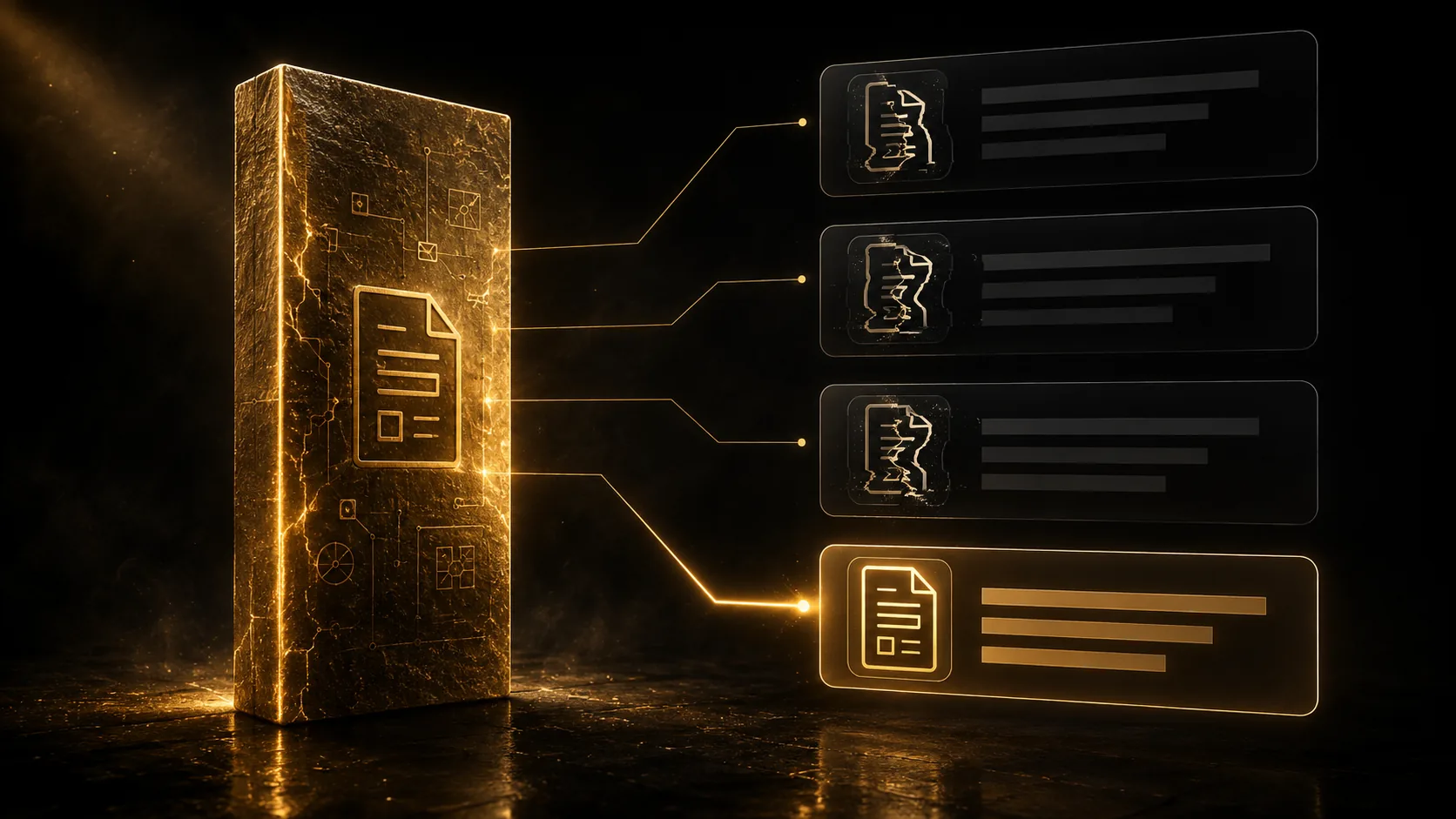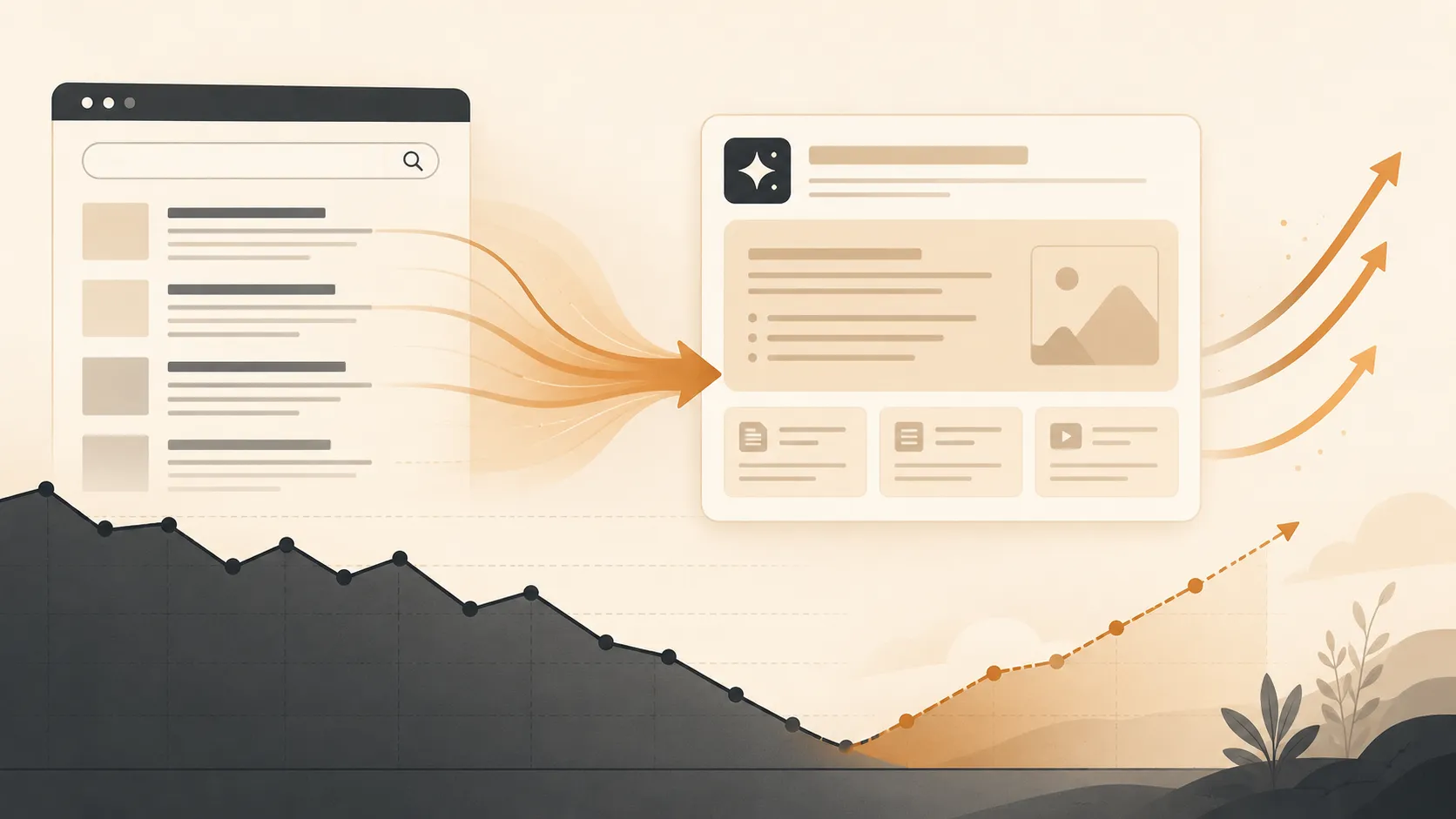

Winning an AI citation is not the finish line. Only about 30% of brands that appear in one AI answer are still there in the next (AirOps). If you treat a citation as a permanent asset, you will lose most of what you earn without noticing when or why. Retention is a separate discipline from acquisition, and it is measured differently.
The counterintuitive part is that a citation you already hold is often easier to lose than an equivalent one is to win, because nothing about holding it is automatic. The page that earned it does not get more authoritative by sitting still, while every competitor working the same query is actively adding corroboration.
The four ways citations decay
Index refresh. Retrieval-based engines re-read the web on their own schedule. A page that cleared the bar in one crawl may not clear it in the next, particularly if the bar moved because more candidates now exist for the same query.
Competitor displacement. The most common cause and the least visible one. Nothing about your page changed. Someone else earned more third-party corroboration and moved ahead of you in the citation pool. You will not see this by auditing your own content, because your content is not the variable that changed.
Recency decay. Engines that weight freshness treat an unchanged page as progressively less current. This is why a strong article can quietly slide over a few months with no edits and no penalty, simply because newer material accumulated around it.
Source-pool churn. If your citation came via a third-party page - a listicle, a community thread, a review - then that page's fate is your fate. It gets rewritten, reorganised, or deprioritised, and your mention leaves with it. Because roughly 85% of brand mentions in AI answers originate from third-party pages (AirOps and Kevin Indig), this is a larger exposure than most teams account for.
Telling real drift from noise
This is where most retention work goes wrong. Teams react to single observations, chase causes that do not exist, and burn credibility on fixes that were never needed.
| Signal | Reliable reading | Unreliable reading |
|---|---|---|
| One missed check | Generation variance; note it, do not act | "We lost the query" |
| Several consecutive misses | Real change with a traceable start date | "It has been declining for a while" |
| Small move in overall citation share | Usually inside the error band on a small query set | "Share is falling, escalate" |
| Loss on one engine only | Engine-specific retrieval change | "Our content got worse" |
| Loss across all engines at once | Something changed on your side, or a shared source dropped | "The algorithms changed" |
Two rules make this tractable. Measure streaks, not snapshots: a query needs several consecutive losses before it counts. And respect your sample size: with a small tracked query set, a movement of a percentage point or two in overall share is noise, and treating it as signal manufactures work. If a metric can move that far without anyone doing anything, it cannot tell you whether anything was done.
The engine dimension matters too. Only 11% of domains are cited by both ChatGPT and Perplexity simultaneously (The Digital Bloom, 2025). A loss on one engine and a hold on another is the expected pattern, not a contradiction.
What actually holds a position
There are two layers, and they do different jobs.
On-page freshness and structure keep a page eligible. Updating the page, keeping facts current, maintaining answer-first structure so passages remain cleanly extractable, keeping schema valid. This is necessary. It is also the layer everyone does, which is precisely why it does not differentiate you.
Off-page corroboration makes a position defensible. When two pages are comparably well written, the engine keeps choosing the one more independent sources point at. That is the variable competitors move when they displace you, and it is the only one that compounds. A page with steady third-party corroboration behind it can hold a citation through an index refresh that drops a better-written page with none.
The practical consequence: if you are losing citations and responding only by editing content, you are working the layer that does not decide the outcome. For the underlying mechanics of why retrieval authority behaves this way, see the five questions AI works through before recommending you.
A retention routine that works
- Fix the query set. Retention is only measurable against a stable list. Changing the questions each month makes trend data meaningless.
- Check often enough for streaks to mean something. Roughly daily per query gives a month's worth of runs and lets you date a loss precisely.
- Alert on consecutive losses, not on any loss. Set the threshold above the level where variance operates.
- When a loss confirms, look outward first. Check who is being cited instead before auditing your own page. Displacement is more common than degradation.
- Refresh the page on a cadence, not in a panic. Recency-weighted engines reward maintained pages; they do not reward a scramble after a loss.
- Keep adding corroboration. This is the only activity that raises the floor rather than defending the current position.
Where CLEO fits
CLEO's GEO engine tracks citation presence per query per engine over time, so a loss surfaces as a consecutive-run streak with a start date rather than a vague sense that things got worse. Coverage spans eight supported AI engines - ChatGPT, Bing AI Overviews, Google AI Overviews, Perplexity, Gemini, Claude, DeepSeek, and Grok - with up to four active per site at a time.
Competitor monitoring tracks named competitors by win rate, citation share, average position, and threat tiers, which answers the outward-looking question first: who took the position. The Social engine listens across X, LinkedIn, Reddit, Medium, YouTube, Quora, and Bluesky, and the Citation Loop connects that off-site activity to citation data, so corroboration work can be judged by whether the citations held rather than by how much of it was done.
The measurement discipline is the point. For client DisburseCloud, a payment disbursement platform, CLEO took AI citation share from 17% to 67% in 90 days at 95% Wilson confidence. Reporting a change at a stated confidence level, rather than as a raw percentage, is what separates a result you can act on from a number that moved.
Frequently asked questions
Why do I lose AI citations I previously won?
Index refresh, competitor displacement, recency decay, or churn in the third-party page that carried your mention. Displacement is the most common and the hardest to see, because nothing about your own content changed.
How do I tell real drift from noise?
Use consecutive-run streaks rather than single checks, and ignore movement inside your sample's error band. On a small tracked query set, a percentage point or two of share movement is variance, not signal.
What actually holds a citation?
Off-page corroboration. On-page freshness and structure keep a page eligible, but when two pages are comparably good the engine keeps choosing the one more independent sources point at.
How often should I check?
Often enough that a streak is meaningful. Roughly daily per query over a month gives enough runs to date a loss. Monthly checks tell you something changed but not when, which makes the cause very hard to trace.
Is losing citations a sign something is broken?
Usually not. With only about 30% of brands persisting from one answer to the next, churn is the baseline condition of the surface. What matters is whether your retained share is rising over time, not whether any individual query held.
Check your score. Start with your baseline. Enter a domain at regencleo.ai/scan - the engine reads what ChatGPT, Google AI Overviews, and Perplexity say in response to your category's most-asked questions, reads where you sit in classical search, and reads what the social surfaces carry. It returns a single page, no login required. Paid GEO plans extend coverage to Claude.