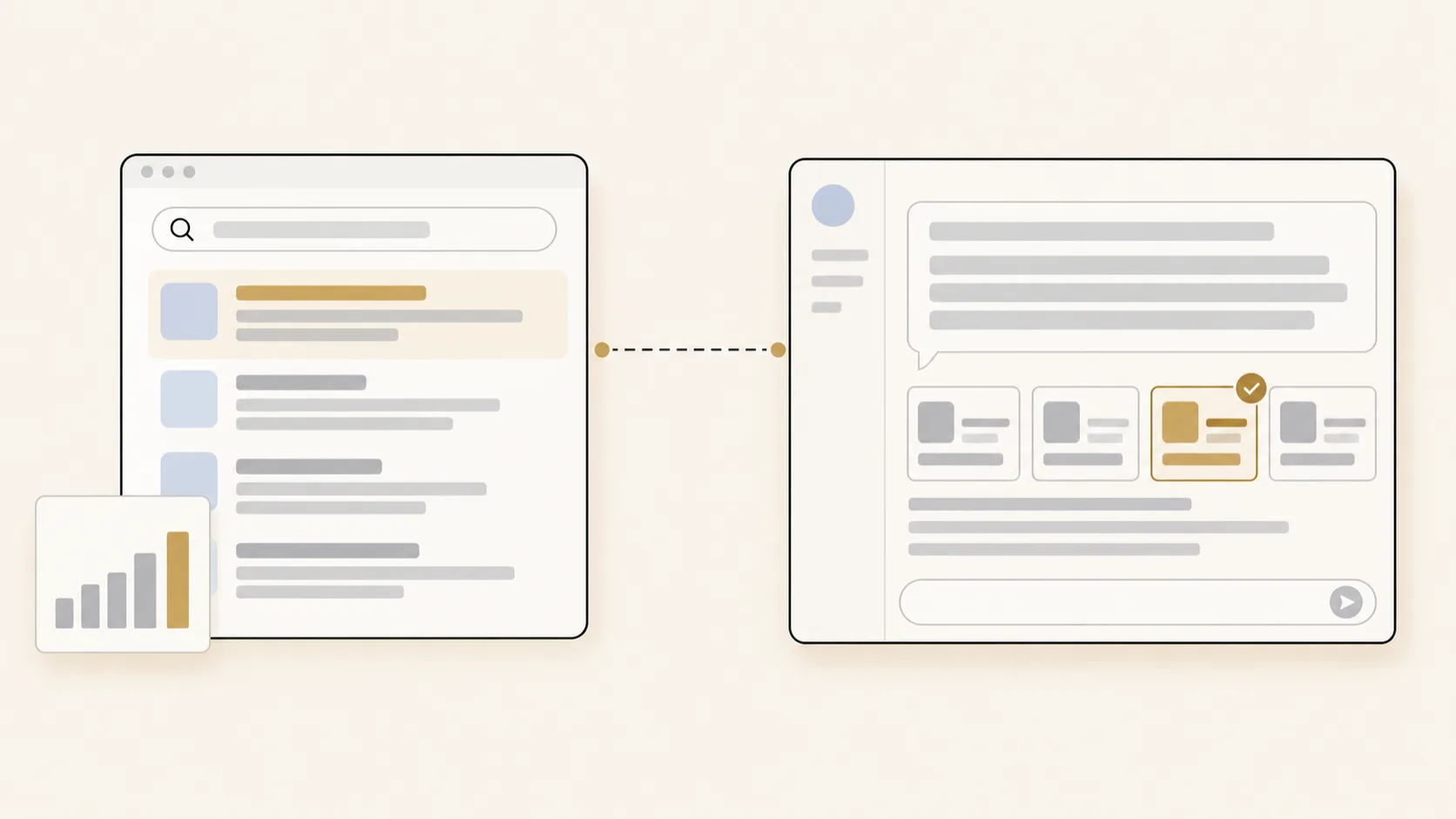
If your team already relies heavily on Semrush, keep it. Semrush tells you where you rank. Brand visibility in LLMs is a different measurement: whether an AI engine names you when someone asks it for a recommendation instead of running a search. CLEO by RegenAI is built for that second job, and it is designed to sit alongside the SEO suite you already trust rather than replace it. For a Semrush-heavy team, that is the point of it.
This matters far more than it did a year ago. AI-referral traffic to US retail sites grew 1,200% between July 2024 and February 2025, according to Adobe Analytics. In November 2025 Adobe announced a deal to acquire Semrush for roughly $1.9 billion. Whatever else that deal means, it confirms that keyword rank and AI answer presence have become two jobs worth paying for.
Brand visibility in LLMs comes down to whether an AI engine names your brand when it is asked a relevant question. It has nothing to do with where you rank on a results page, because in many of these conversations there is no results page at all. Someone asks ChatGPT, Perplexity or Gemini a question and gets back a synthesised answer with perhaps three or four sources woven in. You are either one of them or you are absent from that conversation.
Pew Research Center’s 2025 study of real browsing behaviour shows what is at stake. People who saw a Google AI Overview clicked through to a traditional search result 8% of the time, against 15% for those who did not see one, according to Pew’s analysis of real search sessions. When nobody scrolls past the summary, being named inside it is what counts.
Why Semrush and an AI visibility platform do different jobs
Semrush is built for research depth: keyword databases, backlink graphs, PPC data and competitive audits you can run on demand. That depth is its product, and an AI visibility platform has no reason to copy it.
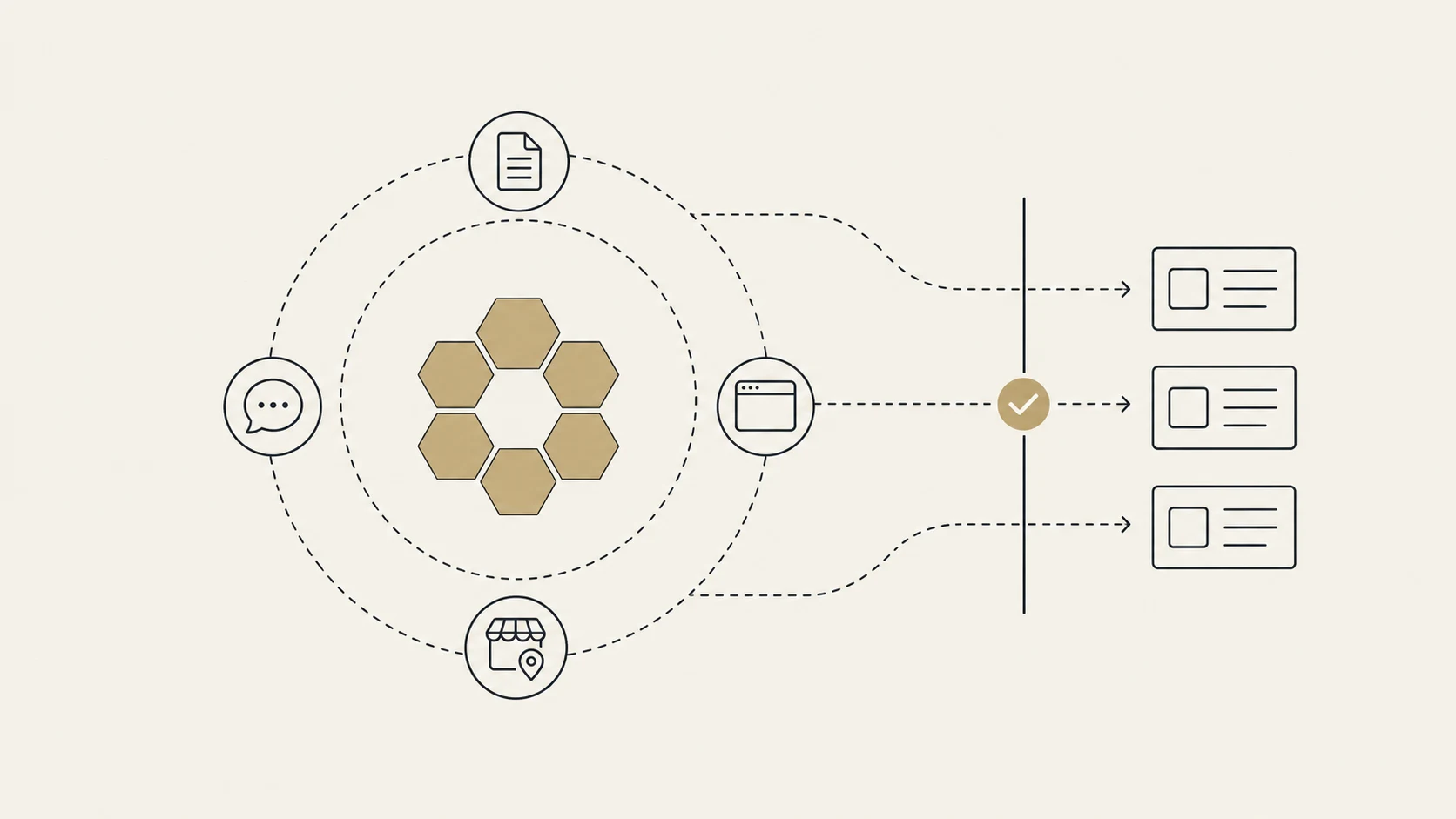
CLEO works at a different layer: AI visibility, SEO, content, social, reviews and maps, with every change going through your approval. Keyword research and backlink analysis stay where they already live; CLEO adds what a research suite was never built to do, which is getting your brand into the answers. That is why teams commonly run CLEO alongside an existing SEO platform rather than choosing between them.
The question the AI layer answers is different too. Not “where do we rank” but “when an AI engine answers, are we in the answer, and what do we change if we are not.”
The category this tool actually sits in
AI visibility tools come in a few distinct kinds, and knowing which one you are buying changes what you should expect from it:
- Focused AI monitors (tools like Otterly.ai and Peec AI) show you where a brand stands across AI engines but do not act on what they find.
- Enterprise answer analytics platforms dig deeper into prompt sets and source trust, built for bigger teams running structured testing programmes.
- Established SEO suites such as Semrush, BrightEdge and Ahrefs have added AI answer tracking as an extra feature next to their core search data.
- Closed-loop platforms like CLEO by RegenAI track AI visibility and then act on what they find, feeding those insights across AI visibility, SEO, content, social, reviews and maps, with every change going through your approval.
This is more than a labelling difference. A monitor gives you a report. A closed loop takes the finding, writes the fix server-side into your CMS once you approve it, and measures again, so the next report shows whether the change worked.
How to judge a tool in a young category
AI visibility is a young category, so the fair test for any tool in it is proof with the method attached. CLEO publishes its own. On its own site, regencleo.ai, AI Readability moved from 35 to 96 and GEO from 14 to 50 in 30 days, with no backlinks and no paid promotion. For client DisburseCloud, a US payment disbursement platform, AI citation share moved from 17% to 67% in 90 days at 95% Wilson confidence. CLEO runs in production on 208 sites in 8 countries, and named customers describe their results on the testimonials page.
Ask every tool on your shortlist for the same disclosure: the query set, the engines, the window and the confidence interval. A result stated with its method is one you can check.
The simplest starting point is your own brand. If your team cannot say with confidence whether you show up when a buyer asks an AI assistant for a recommendation, that is the gap worth closing first. The free Presence Scan gives you a baseline, and how CLEO fits a Semrush-heavy team covers plans and scope in detail.
What this market shift means if you are already deep into Semrush
Seer Interactive’s 2025 analysis of one client found ChatGPT-referred visitors converting at 15.9%, against a Google organic average of 1.76%. With traffic worth that much, it matters whether the AI answer sends those visitors to you or to the brand it names instead.
None of that means you should drop a tool that is already doing its job well. It is a reason to be clear about which job each tool does: one tells you where you rank, the other gets you into the answer. Most teams need both, and the sooner the second is in place, the sooner you can see whether the answers name you.